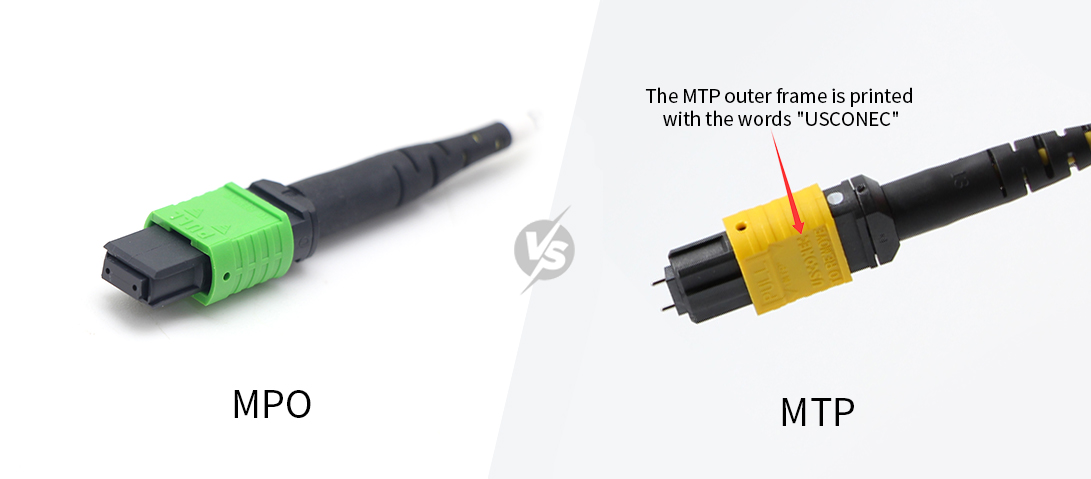
The selection of connectors plays an extremely crucial role during the development of high-speed networking and data centers. That means, fiber optic connectors are those connectors that help in connecting various parts of fiber together. MPO and MTP connectors that are renowned for their high-density and fast signal transfer features are popular choices in modern-day networks. While these two connectors seem similar to one another, their MPO vs MTP differences are essential in regard to the design and performance of each connector. The following article will explain to you all about the differences between MPO and MTP connectors.
What Are MPO and MTP Connectors?
- MPO(Multi-fiber Push On) acts as an effective medium for the transfer of signals through multiple fiber cables. It is extensively utilized in high-density fiber networking environments such as data centers and high-performance computing networks.
- MTP(an enhanced version of MPO) provides increased performance along with additional customized features. MTPs are highly accurate and offer better insertion losses and reliability, thus becoming popular in many applications.
Key Differences Between MPO and MTP Connectors
1. Performance Differences
There are several areas where MTP connectors have a better performance than conventional MPO connectors. First, the MTP connector is characterized by a precise design. In this regard, it ensures lower insertion loss and higher transmission efficiency. Second, MTP connectors have a finely adjusted end face, which reduces the likelihood of poor contact when making connections between the fibers.
| Connector Type | Insertion Loss | Return Loss | Performance Level |
| MPO | Higher | Lower | Standard |
| MTP | Lower | Higher | High Performance |
2. Insertion Loss and Return Loss
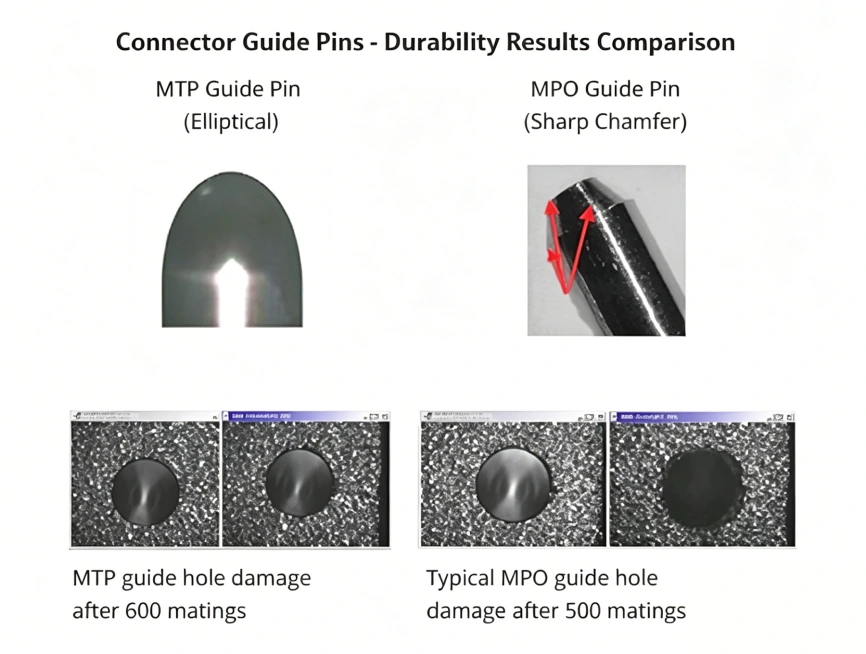
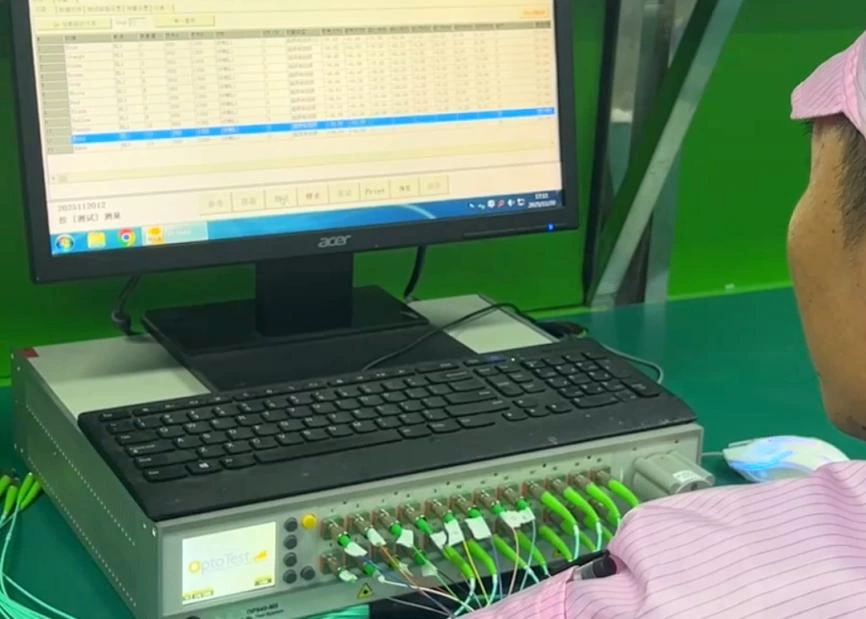
In terms of the MPO vs MTP differences, the MTP connector shows much less insertion and return losses in comparison with MPO connectors. Consequently, under high-density connection conditions, MTP connectors demonstrate greater stability and efficiency in terms of signal transmission without losing any information. Hence, MTP connectors are used for higher-performance needs.
3. Applications
Though MPO connectors are sufficient enough to fulfill the network requirements of various organizations, MTP connectors perform better than MPO connectors in terms of delivering high volume and high-speed data transmission.
| Application Area | MPO Connector | MTP Connector |
| General Office Networks | Meets Basic Needs | Rarely Used |
| High-Speed Data Transmission | Lower Performance, Suitable for General Use | High Performance, Preferred |
| Data Centers | Usable | Preferred Connector |
4. Durability and Manufacturing Quality
MTP connectors are usually produced to a higher quality standard than MPO connectors. Since more high-quality materials are used in the production of MTP connectors, such as metal plating and improved plastics, their reliability increases. This also means that MTP connectors are superior when it comes to dense environments requiring multiple insertions/removals.
| Connector Type | Material Quality | Durability | Suitable Application |
| MPO | Standard Materials | Medium | General Applications |
| MTP | High-Grade Materials | High | High-Density, High-Volume Scenarios |
5. Compatibility
MTP connectors are compatible with MPO connectors, meaning that MTP can use standard MPO adapters. However, it’s important to note that not all MPO connectors are perfectly compatible with MTP adapters, so compatibility should be ensured during upgrades.
How to Choose Between MPO and MTP Connectors?
When deciding between MPO and MTP connectors, consider the following key factors:
Network Performance Requirements:
- MPO Connectors: For general use networks where network performance requirements are average, such as office networks.
- MTP Connectors: Recommended for networks requiring high speed and high density, such as data centers.
Cost vs. Performance:
- MPO Connectors: More cost-effective, making them ideal for applications that don’t require extreme performance.
- MTP Connectors: Although more expensive, MTP connectors offer higher reliability and are essential for high-performance networks.
Environment and Scalability:
- MPO Connectors: Best for smaller or less complex networks that don’t require extensive scalability.
- MTP Connectors: Preferred for large-scale deployments, such as data centers or high-speed fiber networks, where scalability and performance are paramount.
Conclusion
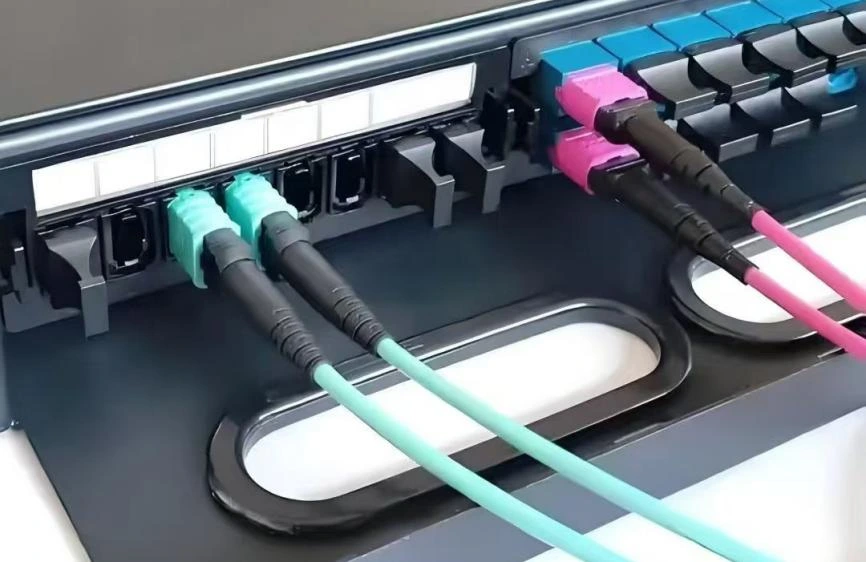
In the MPO vs MTP differences comparison, when considering the MPO versus MTP comparison in terms of advantages and disadvantages, it can be observed that the MTP connectors perform better in terms of performance, lower loss, and durability. The use of MTP is certainly recommended when there is a need for high-performance and high-density applications. For other regular network requirements, MPO connectors may suffice in terms of performance. It is recommended that one understand the differences between the two connectors and choose accordingly for optimal network performance.
If you would like professional assistance regarding choosing MPO or MTP connectors for your network, OMC GROUP can help. Having a vast amount of industrial experience, our experts will be able to guide you regarding what kind of products or services you should choose based on your requirements. Should you require further assistance, please contact us for immediate service.