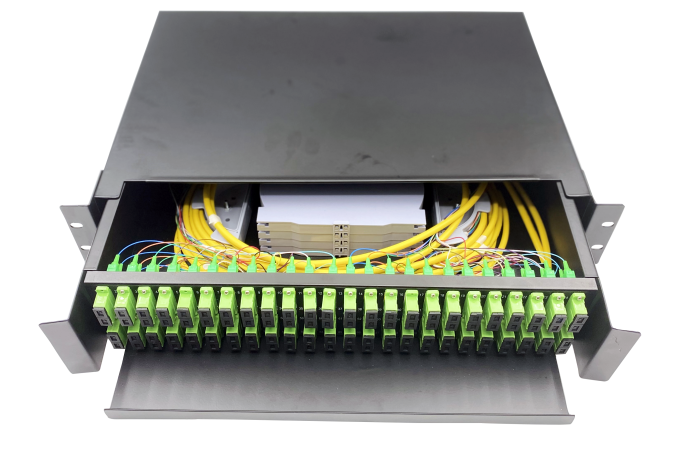
ODF panel selection guide
The selection of ODF is not limited to structure, but also many factors such as application should be considered. Some of the most important factors are introduced below.
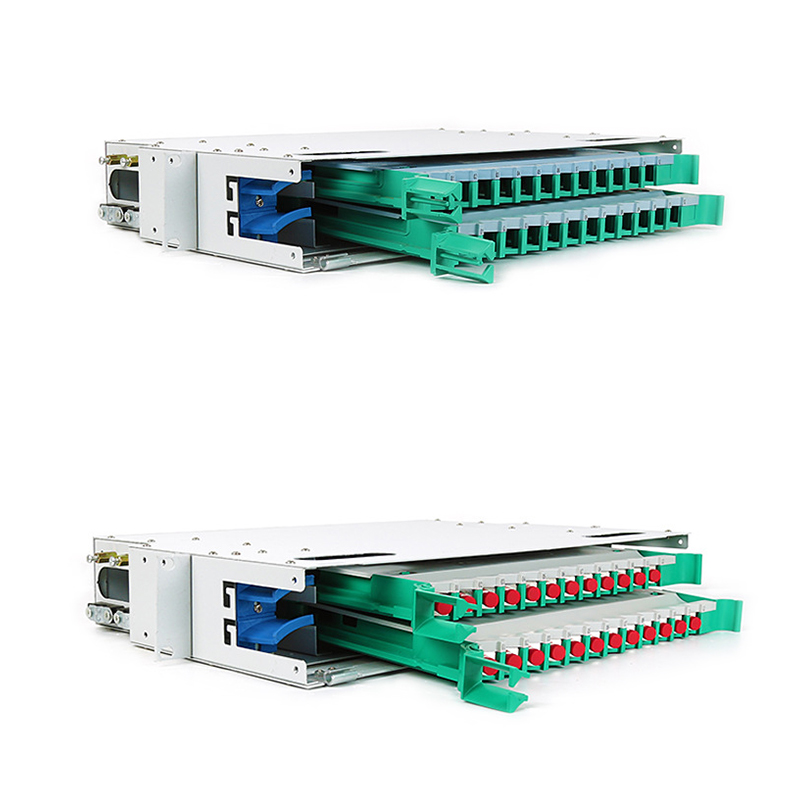
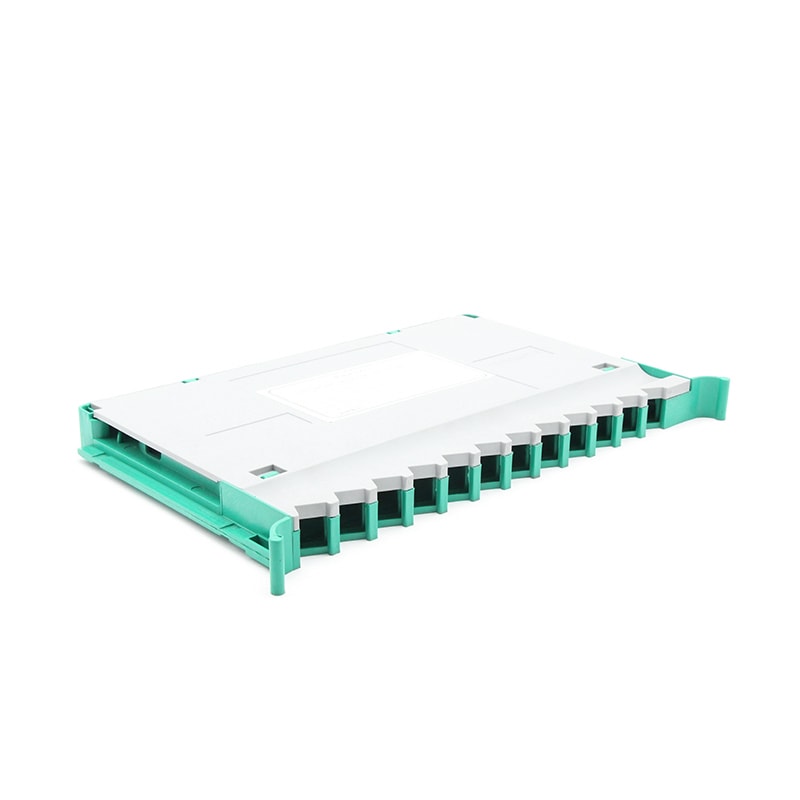
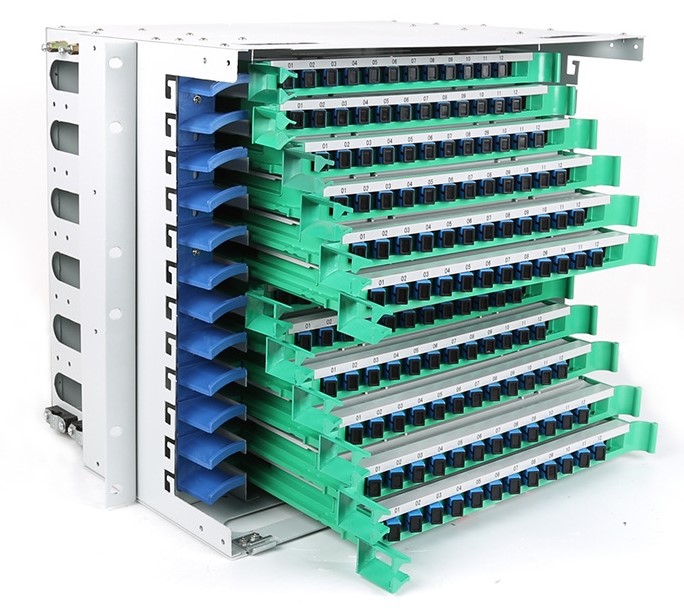
Number of fibers: With the increase in the number of fiber connections in places such as data centers, the demand for high-density 19′ ODF unit panel has become a trend. At present, 24-port, 48-port and even 144-port ODFs for fiber optic cables on the market are very common. At the same time, many suppliers can provide customized ODFs according to customer requirements.
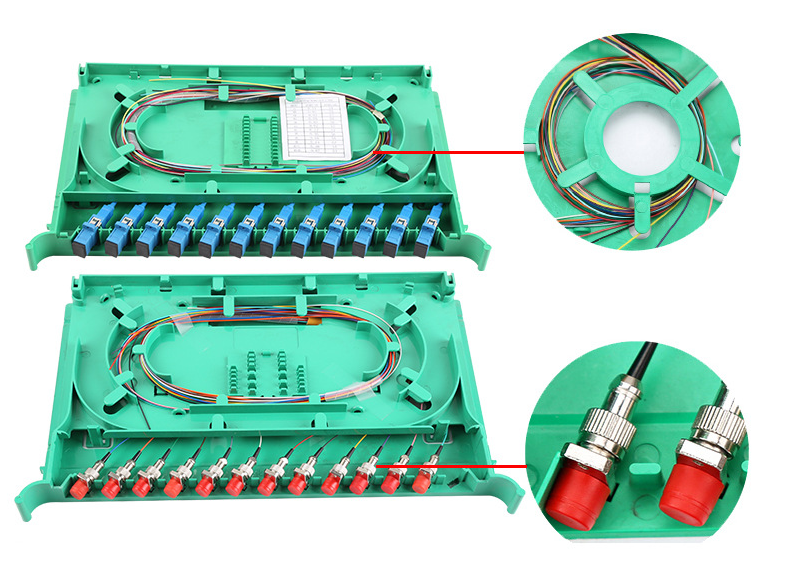
Manageability: High density is a good thing, but management is not easy. 19′ ODF unit panel should provide a convenient management environment for technicians. The most basic requirement is that ODF should allow easy access to the connectors in front and behind these ports for easy insertion and removal. This requires that ODF should reserve enough space. In addition, the color of the adapter installed on the ODF should be consistent with the color code of the fiber connector to avoid incorrect connection.
Flexibility: As mentioned earlier, rack-mounted ODF is relatively flexible in modular design applications. However, another aspect that can effectively improve the flexibility of ODF is the port size of the adapter on the ODF. For example, an ODF with a duplex LC adapter size port can install a duplex LC, SC or MRTJ adapter. An ODF with an ST adapter size port can install ST adapters and FC adapters.
Protection: The fiber distribution frame integrates fiber connections. Fiber connections such as fiber splices and fiber connectors are actually very sensitive in the entire transmission network and are directly related to the stability and reliability of the network. Therefore, a good ODF should have a protective device to prevent the fiber connection from being damaged by dust or pressure.
Conclusion
19′ ODF unit panel is the most popular and comprehensive fiber distribution frame, which can reduce costs, improve reliability and flexibility of fiber networks during deployment and maintenance. High-density ODF is the trend of the telecommunications industry. Selecting ODF is important and complex, and requires full consideration of application and management. Factors such as structure, fiber count and protection are just basic elements. Only after repeated comparisons and full consideration can you choose an ODF that can meet current needs and meet the challenges of future growth and easy expansion without sacrificing cable management or density.