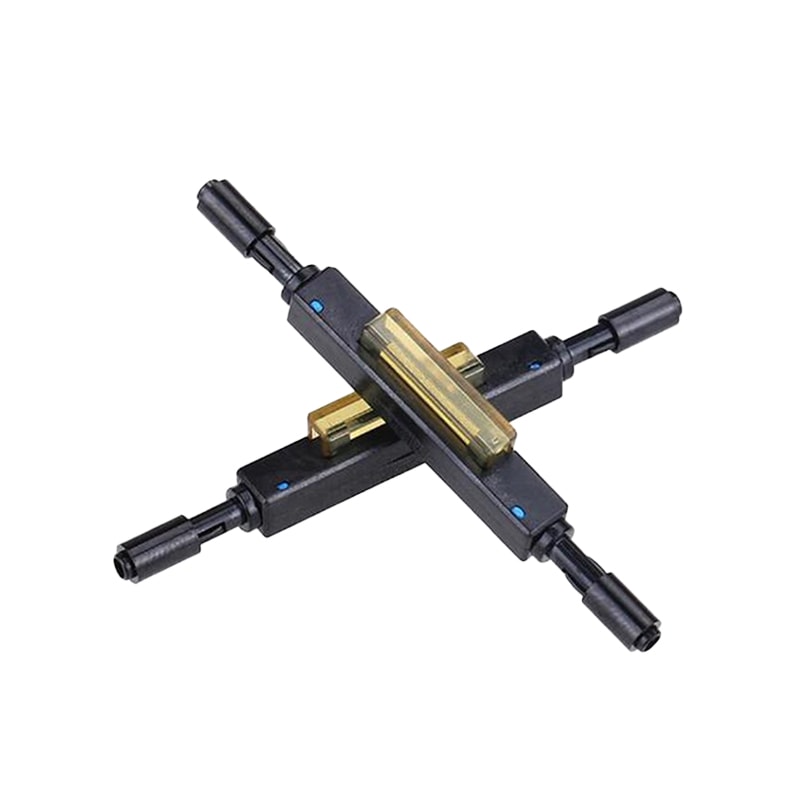
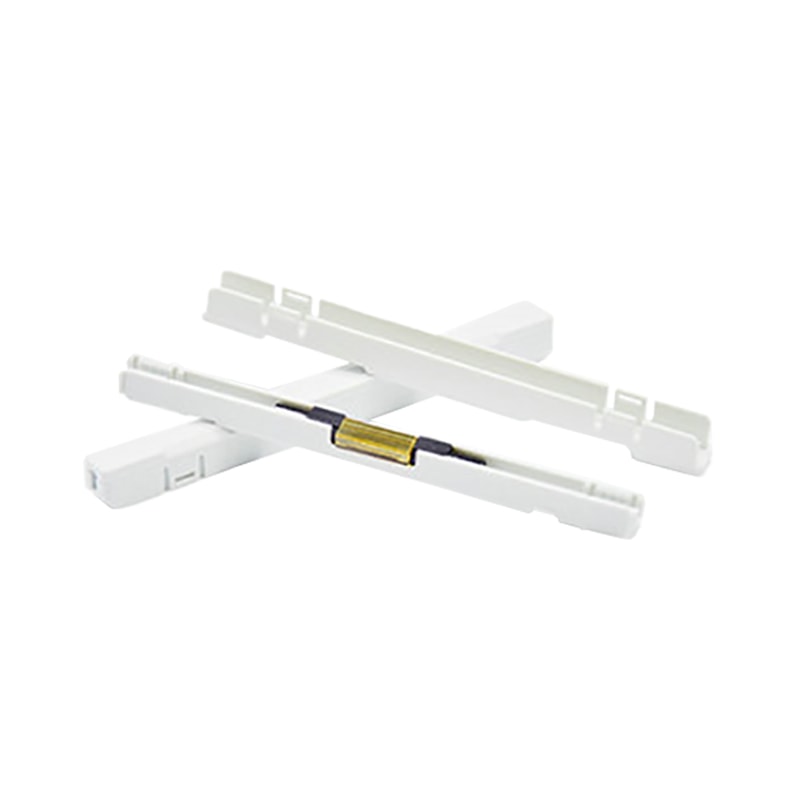
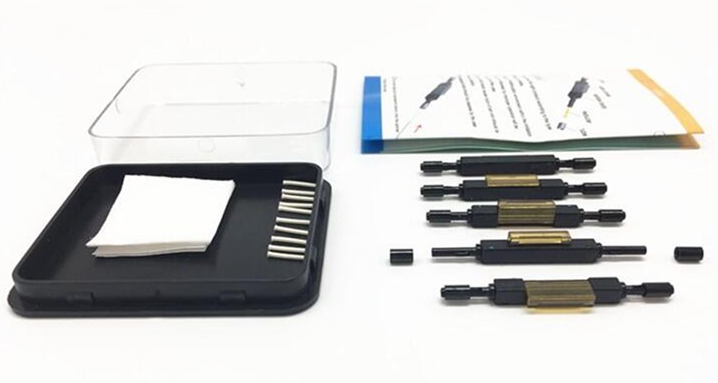
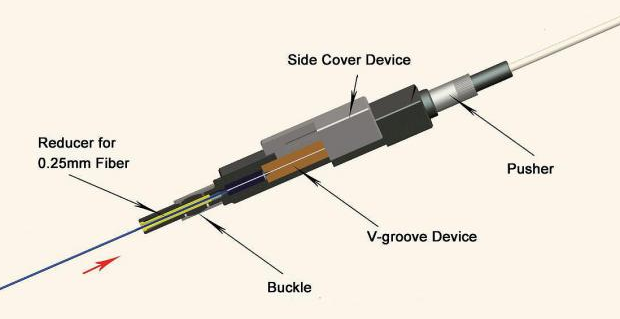
In a fiber mechanical splice, two cleanly cleaved fiber end faces are mechanically aligned by a special housing. Typically, a matching gel is placed between the fiber end faces to maximize coupling and minimize back reflections.
Advantages of Fiber Mechanical Splicer
Using Fiber Mechanical Splicer has some significant advantages over fusion splicing.
- Fiber Mechanical Splicer require no power supply
- Many fiber optic mechanical splice designs require no additional tools other than fiber strippers and fiber cleavers
- They can be used where welding is impractical or impossible
- Fiber optic mechanical splices can be made in minutes, making them ideal for temporary connections
Disadvantages of Fiber Mechanical Splicer
- The insertion loss is high. The insertion loss of the optical fiber mechanical joint is about 0.2dB, which is higher than the 0.02dB loss of the typical hot-melt quick connector.
- Fiber Mechanical Splicers are typically used for multimode fiber. The tight alignment tolerances of single-mode fiber make it difficult for mechanical splices to meet
- Fiber Mechanical Splicers are more expensive than fusion splices, but if you take into account the expensive fusion splicer required for the splice, the average cost of a mechanical splice is actually much lower if only a few splices are made.
- Since the refractive index of most index-matching compounds changes with temperature, the optical properties of fiber optic mechanical splices can be sensitive to ambient temperature.
- Fiber Mechanical Splicers are considered less reliable than fusion joints over longer periods of time
- Fiber Mechanical Splicers are only used in relatively benign environments, such as office buildings
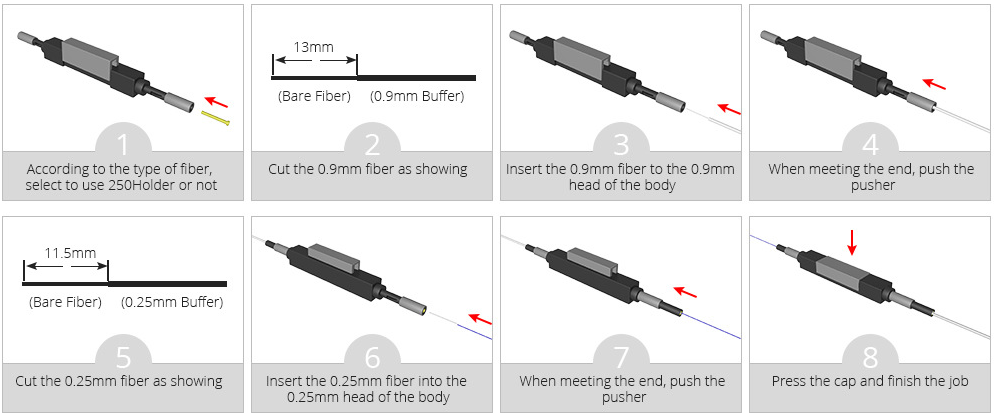
Fiber Mechanical Splicer splicing process