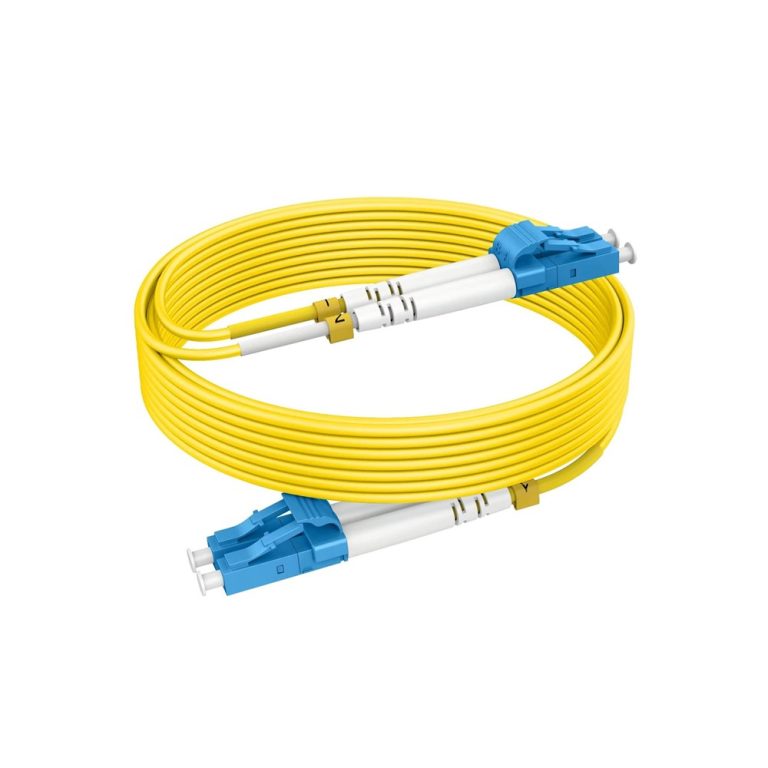
Fiber loopback: This is a basic yet popular concept in optical networking. With increasing speeds in data centers, corporate networks, as well as telecommunication networks, it has become necessary to rely on testing aids such as the fiber optic loopback cable in order to test the performance of the connectivity along with the transceivers.
This paper discusses the topic of fiber loopback in terms of its description, functioning, place of usage, and reasons why this technology has gained popularity in contemporary fiber optics.
What Is Fiber Loopback?

Fiber Optic Loop-Back: This is a testing device used in the testing of the functionality of the optical ports, the transceivers, or the line cards in a fiber optic network. This device forms a loop-back path using optical signals. After the data sent is transmitted, the receiver gets the data immediately. If the data received is the same as the data sent, it means the data is being received accordingly.
Generally, fiber optic loopback solutions are compatible with various connectors such as LC, SC, and MTP connectors, in addition to single-mode and multimode fiber optic environments. This makes fiber optic loopback compatible with a wide range of network configurations.
Process of Fiber Optic Loop Back
The mechanism of fiber loopback is pretty easy to grasp. Optical equipment like switches or fiber optic routers contain transceiver ports that consist of a transmitter and a receiver. A fiber optic loopback cable is used to connect these two circuits together.
During testing:
- The light signal is transmitted through a loopback cable by the transmitter.
- The signal is routed back to the receiver through the cable.
- Network diagnostic tools verify if the received data corresponds to the transmitted data pattern.
Given that the signal does not leave the device, a failure revealed during fiber loopback testing is always an indicator of an error with the transceiver and/or internal configuration and not with the fiber-optic connection.
Typical Usage of Fiber Loopback
Fiber loopback finds extensive applications in various phases of network implementation and maintenance. The most common uses of fiber loopback are:
Testing Before Deployment
Prior to putting a new switch or router in operation on the network, fiber loopback testing ensures that the optical interfaces are functional.
Troubleshooting and Diagnostics
When there is a problem with a connection, fiber loopback allows one to determine if there is a problem with the device or with the fiber cables.
Maintenance Checks
Routine inspections may include fiber loopback tests as part of the check for transceiver stability.
High-speed validation
Fiber loopback cables can support data rates from 10G to 100G or even higher. Therefore, these cables can be used in high-speed networks.
The advantage of fiber loop back testing over other forms of testing is that it does not require another device.
Kinds of Fiber Loopback Cables

The fiber loopback products differ according to the type of connectors, fiber modes, and port density.
The long-distance and telecom-grade equipment utilizes the single-mode fiber loopback cables. Multimode fiber loopback cables are primarily used in data centers and business networks, which typically have shorter distances.
Connectors may include:
- LC fiber loopback connections for compact ports
- SC Fiber Loop Back for Legacy or Industrial Networks
- MTP fiber loopback for dense wave division and parallel optics use
Both are used for the same purpose but are designed to be used in accordance with different hardware standards.
Chief Advantages Associated with Fiber Loopbacks
Fiber loop-back testing has the following advantages that have contributed to its popularity:
- Fast Fault Detection: Loopback tests allow easy verification of the functionality of a port or transceiver.
- High testing accuracy: Since the signal path is controlled and relatively short, it provides reliable and consistent test data.
- Low Cost: Fiber loopback cables are very economical compared to the complete optical test equipment.
- High compatibility: It supports a number of fiber modes, connectors, and speeds.
These advantages of fiber loopback make them very useful for network engineers and technicians.
Basic Steps for Fiber Loopback Testing
Even though the procedures differ slightly from one system to another, the basic steps that can be followed in fiber loopback testing are generally the following:
- Identify which port or transceiver needs testing.
- Choose a suitable fiber loopback cable.
- Connect the loopback cable to the optical port.
- Run diagnostic or link tests on the device.
- Examine the results to verify the integrity of the signals.
- After completing any testing, remove the loopback cable.
It proves helpful to test the hardware to avoid any affect on other networks.
Important Handling Precautions
Although fiber loop-back cables are convenient to use, proper handling is necessary to obtain correct results.
- The connector end faces must be maintained clean in order to prevent signal loss.
- Do not bend the cable beyond its minimum bend radius.
- The loop-back cable should be examined periodically for any physical damage.
- Store unused loopback cables with protective caps in place. They ensure that the products work well and have a longer lifespan.
Conclusion
The main characteristic of fiber optic loopback cables is ensuring a closed signal path, enabling professionals to test equipment, detect problems, and even guarantee network stability. OMC’s MTRJ Loopback Cable and SC loopback Module, among other fiber optic loopback products, effectively demonstrate this characteristic to meet customer needs.