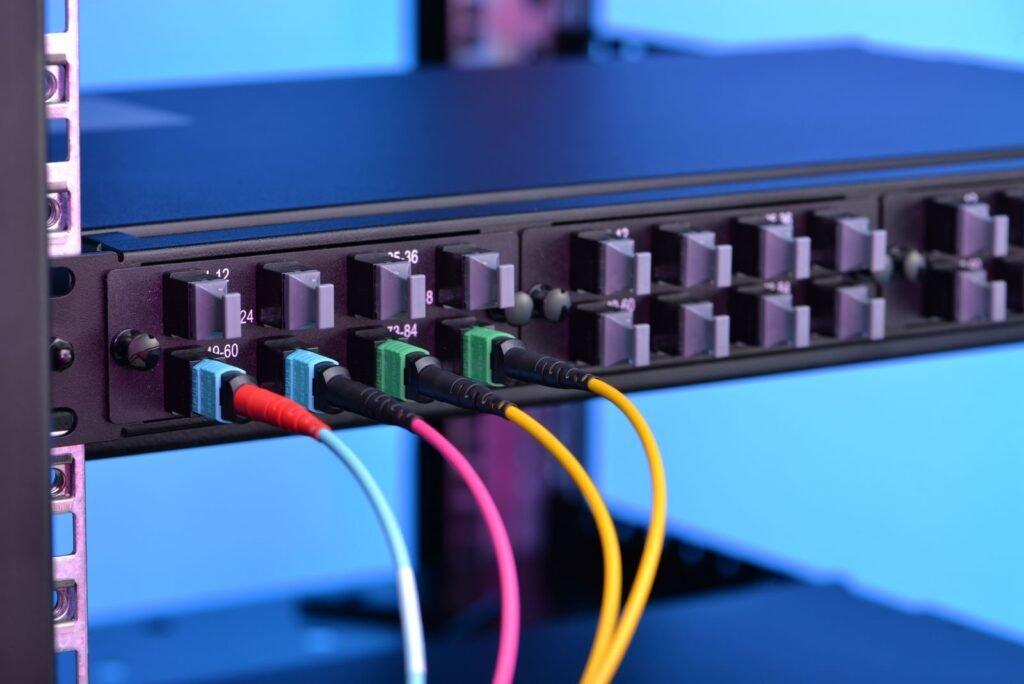
Contemporary data centers and enterprise networks have been confronted with immense challenges in data transmission. This has been fueled by the fast-growing demand for cloud computing, artificial intelligence, and large-scale processing that often limits the capacity of traditional single- or dual-fiber links. Multi-fiber technology is therefore the solution for faster transmission speeds in constrained physical configurations. Among these high-density options, the Fiber MTP Connector stands out as a critical component in high-speed data links, thanks to its engineered design and strong optical performance. This article examines four core advantages of this high-performance connector and explores its value in real-world network deployments.
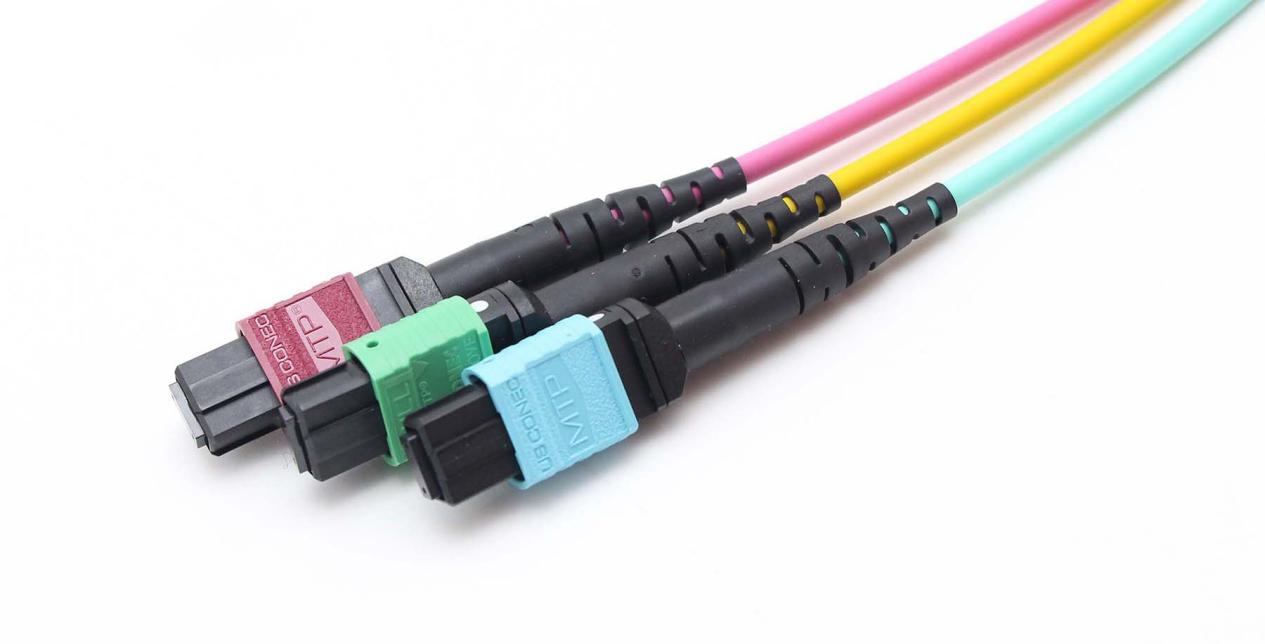
1. Ultra-High-Density Cabling of Fiber MTP Connector to Maximize Data Center Rack Space
Rack space inside data centers carries a premium, making port density per rack unit a top priority during network design.
1.1 Multi-Fiber Parallel Array Structure
Traditional LC duplex connectors support only two optical fibers per interface. In contrast, a single Fiber MTP Connector accommodates 8, 12, 24, or even 72 fibers within a compact footprint. This multi-fiber array configuration significantly reduces the number of patch panels and chassis slots required across the enterprise layout.
1.2 Footprint Reduction and Airflow Optimization
Compared to traditional cabling setups, adopting the Fiber MTP Connector reduces total cable volume by 60 percent to 75 percent. Eliminating bulky cabling bundles offers practical advantages for equipment lifespan:
• LC Duplex: Can support 2 fibers per interface, which allows for a total of 144 fibers in a 1U panel, serving as a benchmark.
• MTP 12 Fiber: Can support 12 fibers per interface, which enables a total of 864 fibers in a 1U panel and provides space savings of around 83 percent.
• MTP 24 Fiber: Can support 24 fibers per interface, which enables a total of 1,728 fibers in a 1U panel and provides space savings of around 91 percent.
Less cable means clear pathways behind server racks, which helps improve airflow and prevents thermal buildup.
2. Rapid Pre-terminated Deployment Cutting Installation and Labor Costs
Field splicing on large-scale network builds demands extensive time and highly trained technicians, raising project costs and timeline risks.
2.1 Plug and Play Architecture
Pre-terminated fiber MTP connector trunk cables come from the manufacturer already pre-assembled and optically tested for performance. All that is left to do is snap the trunks onto the cassette modules or adapter panels. This saves time, as technicians do not have to strip, cleave, splice, or polish the fibers at the installation site.
2.2 Accelerated Project Lifecycles and Lower Risk
Using a pre-terminated Fiber MTP Connector setup can cut installation time by more than 70 percent compared to field splicing. Eliminating on-site termination variable quality also reduces rework rates, keeping projects on schedule and within budget while protecting critical link performance.
3. Fiber MTP Connector: Superior Optical Performance and Mechanical Reliability
At speeds running tens or hundreds of gigabits per second, minor attenuation at connection points leads to packet drops and system latency.
3.1 Structural Enhancements and Low Insertion Loss
As a refined, high-performance evolution of the MPO specification, a standard Fiber MTP Connector incorporates removable housings, floating ferrules, and precision guide pins. These mechanical refinements maintain physical alignment during repeated matings. Low-loss MTP connector variants keep insertion loss under 0.2 dB, outperforming standard connectors rated at 0. 5 dB.
3.2 Stable Support from High-Density Adapters
To maintain seamless optical signals across dense line cards, several matching high-precision adapter designs are widely used:
- Flangeless Adapters: Designed for high-density patch panels, these omit side flanges to allow tight horizontal spacing. A prominent example is the OMC-CS-SM Flangeless Adapter. Featuring high-precision ceramic alignment sleeves, it provides low insertion loss and reliable pull-out resistance for compact dual connection setups.
- Standard Flanged Adapters: Built with side screw holes, these suit traditional distribution boxes where vibration resistance and physical stability are vital.
- Shuttered Adapters: Equipped with automatic internal dust doors, these close upon cable removal to shield technicians from laser exposure and block airborne dust.
These supporting components pair directly with the Fiber MTP Connector to form a reliable physical layer for critical data links.
4. Compatibility for Smooth 40G, 100G, and 400G Upgrades
Network infrastructure requires long term planning so speed upgrades do not force full cable overhauls that drain capital resources.
4.1 Parallel Optics and Polarity Management
Legacy single-speed networks rely on duplex transmit and receive paths, whereas 40G, 100G, and 400G architectures utilize parallel optics. The Fiber MTP Connector supports parallel transmission out of the box. Combined with Type A, Type B, or Type C polarity rules, it ensures correct transmitter-to-receiver mapping across every active channel.
4.2 Flexible Breakout and System Expansion
Using MTP-to-LC breakout cables, network administrators can split one 40G MTP port into four 10G LC ports or break out one 400G MTP port into multiple 100G ports. This lets you upgrade bandwidth capacity without changing any cabling.
Summary
Fiber MTP connectors offer high density, rapid pre-assembly capability, low fiber optic loss, and migration toward future higher-speed technology. Implementing a good MTP cable system design extends the life of infrastructure and ensures a strong base for future bandwidth expansion.
Connectors of superior quality and hardware compatibility are critical considerations in the design of a high-density optical network. If you need help picking a Fiber MTP Connector, trunk assemblies, or adapter accessories, or if you require an exclusive cabling design, feel free to contact OMC!