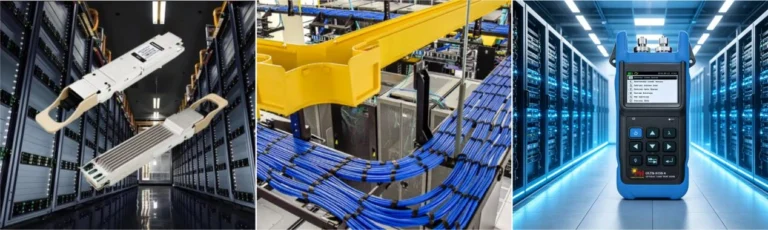
With the further development of optical circuit switching (OCS) as the main architectural basis of large-scale data centers and artificial intelligence computing platforms, high-speed transmission, extremely low latency, and high-density connectivity have become basic necessities. The traditional optical fiber cables that work with standard LC connectors have already been unable to meet the needs of current OCS network connections. As multi-fiber optic assembly solutions, the MTP trunk cables have served as key components for the construction of efficient, cost-effective, and reliable OCS networks. Then, what are the main advantages of MTP trunk cables in OCS architectures?
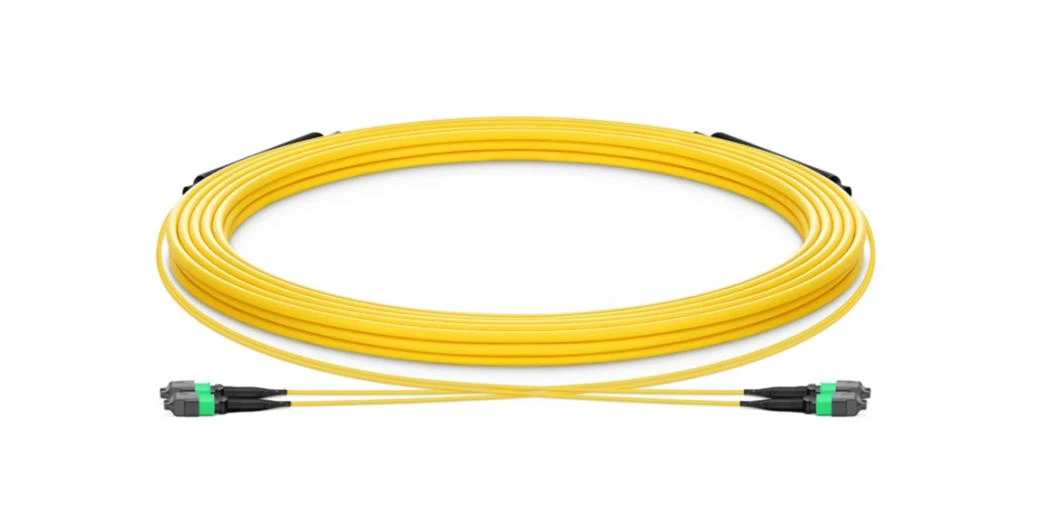
1. High-Density Cabling Enhances Space Efficiency and Utilization
The OCS systems have high port density, making it crucial to deploy cabling solutions that offer great space efficiency. In comparison with the conventional LC duplex cabling solution, the MTP trunk cable employs an advanced integration structure to deliver higher cabinet space utilization efficiency as well as reduced wiring complications.
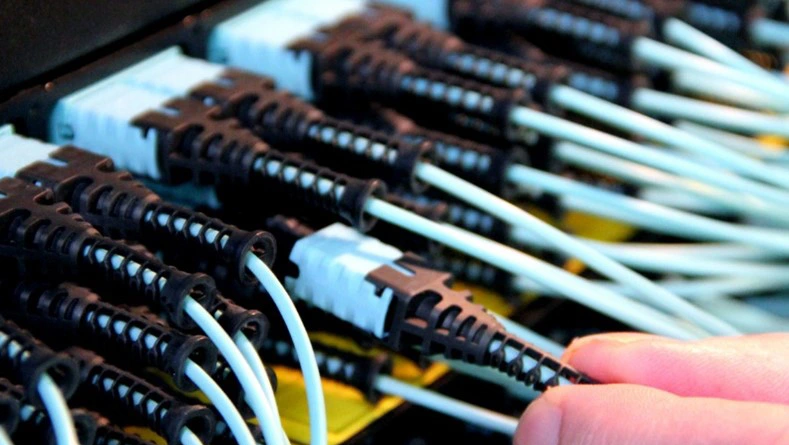
- Fiber Density: A standard 1U rack can hold up to 144 optical fibers, using traditional LC connectors. However, up to 864 fibers could be accommodated using MTP trunk cables – nearly six times more dense than the former.
- Less cable clutter: Efficient routing means less obstruction to airflow and better cooling of hardware, which is crucial for proper functioning in high-density OCS. Furthermore, the ease of cabling results in better maintenance operations.
- More efficiency per rack: It becomes easier to deploy more switches, servers, and optical equipment on racks in a limited cabinet area, thus ensuring effective use of the rack space by the OCS matrix system.
2. Increased Bandwidth and Efficient Transmission for OCS
The OCS system is uniquely developed for 40G, 100G, 200G, and 400G high-speed communication networks that require efficient transmission links. MTP trunk cables are optimized for parallel optical transmission and fully support the performance requirements of modern OCS systems.

- High-speed rate transmission: MTP trunk cables support reliable transmission in 40G, 100G, 200G, and 400G optical interfaces that are used in OCS network environments. It makes it possible for the provider to use a new cable system, which will support their future bandwidth expansion.
- Low latency transmission: OCS is well-known for its nanosecond switching delay.MTP trunk cables help maintain these low-latency advantages by providing stable and efficient optical transmission paths. This is especially important for AI model training environments where real-time data interaction between computing nodes directly affects training efficiency.
- High continuity: Massive clusters of artificial intelligence require massive amounts of simultaneous data flow. The use of MTP trunk cable can ensure continuous performance for high-volume data transmission among servers, storage units, and switches, thus ensuring that packets don’t get lost or delay jitters occur.
3. Easy to Install and Maintain the OCS
MTP trunk cables feature pre-terminated connectors that are factory assembled, making installation much easier and reducing dependency on skilled labor.
- Fast deployment: Manually terminating and testing 144 fibers may require an entire day of work, while pre-terminated MTP trunk cables can shorten installation time by more than 70%.
- Plug-and-play: MTP trunk cables eliminate the need for on-site polishing, grinding, or complicated testing procedures. Factory-tested connectors reduce human errors and improve overall connection consistency.
- Easier maintenance: With modular MTP connectivity, changes to networks become easier. Technicians can easily disconnect and reconnect cables without affecting a major part of the network when upgrading or performing maintenance on an OCS.
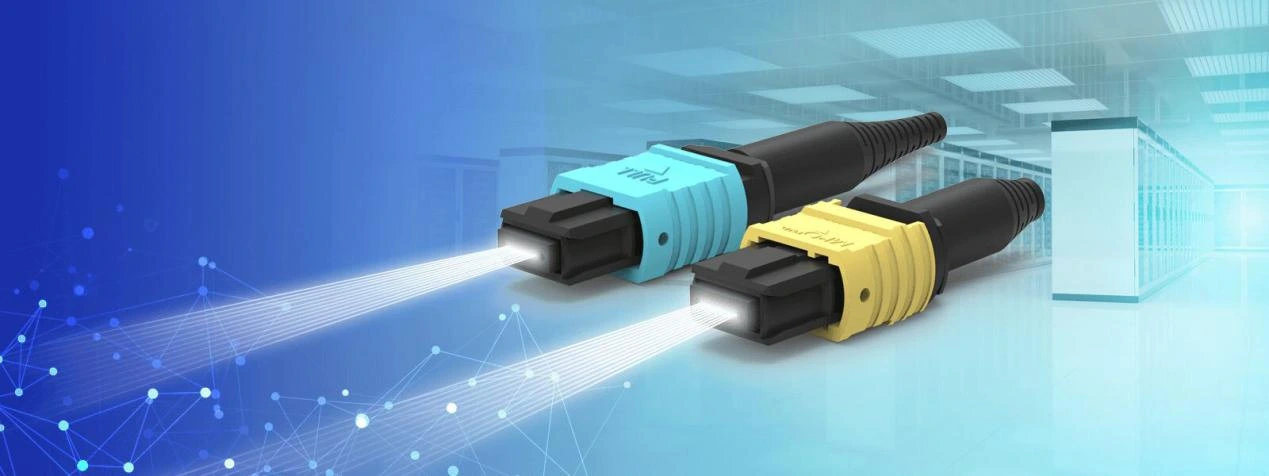
4. High Scalability for Network Evolution
Data centers and OCS systems require continuous capacity expansion and rate evolution. MTP trunk cables are highly scalable and can help with this long-term growth.
- Smooth upgrade rates: MTP trunk cables provide an easy way to upgrade from 10G to 40G/100G, 25G to 100G, 50G to 200G/400G, and 100G to 400G, making sure that the operator will have no problem protecting initial investment. These possibilities will minimize future reconstruction expenses.
- Compatible with common specifications: Available in 12-core, 24-core, and 72-core structures, MTP trunk cables can support access layer, aggregation layer, and core layer deployment requirements in OCS networks. Different fiber count options allow engineers to design flexible and optimized cabling architectures based on actual deployment needs.
- Standardized interfaces: The MTP trunk cables are compatible with standard MPO/MTP panel, cassette, and patch systems. The advantages of standardization and compatibility help to expand network topologies, such as full mesh and 3D toroidal structures, which are widely used in artificial intelligence computing clusters and hyperscale data centers.
5. Improved Signal Quality and Reliability
The signal stability becomes paramount in a high-density OCS environment. MTP trunk cables provide reliable transmission quality through precision design.
- Small insertion loss: Quality MTP trunk cables keep their insertion loss to ≤0.35dB to decrease the attenuation of signals. Small insertion loss results in better performance throughout the transmission process, which ensures stable high-speed communication between devices.
- Optimal connector design: Due to precise alignment and optimal connector design, MTP cables provide protection from any interference and crosstalk when working with high-density wiring. The optical alignment is crucial to ensure stable performance in massive OCS configurations.
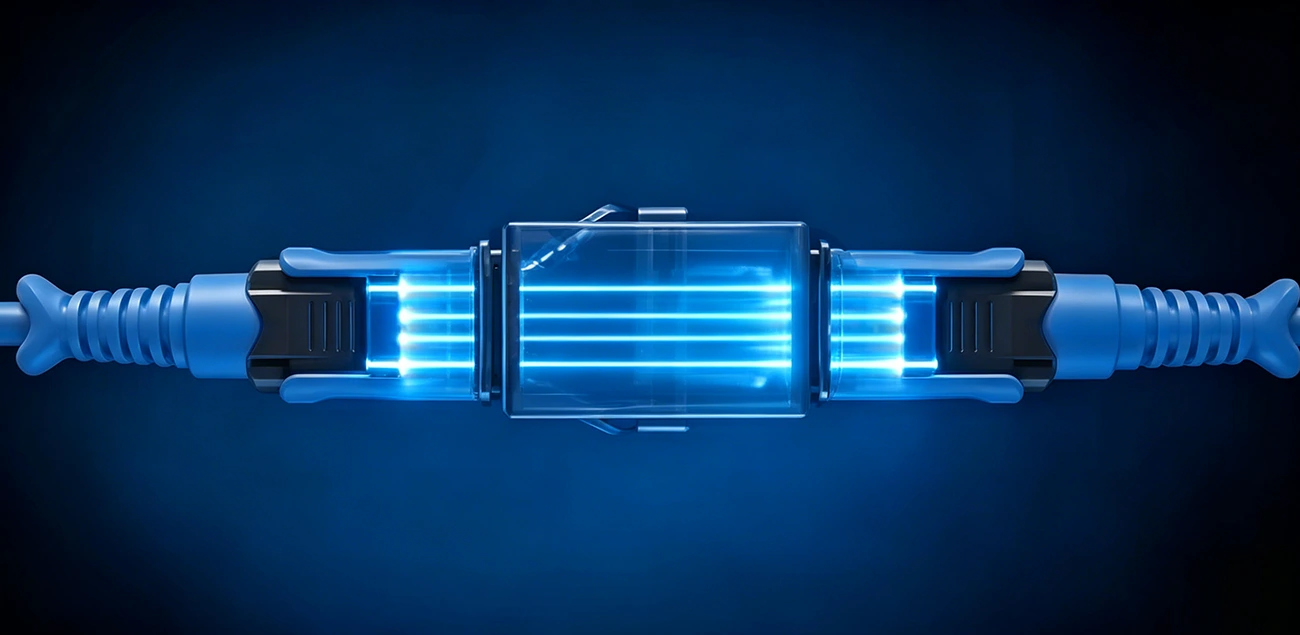
- High operational stability: MTP trunk cables are designed to work under heavy loads continuously. This makes them suitable for long-term operation, thereby reducing the number of errors and minimizing problems caused by cable instability. It becomes essential when it is applied to AI clusters and cloud platforms continuously.
Conclusion
For high-density OCS optical switching, MTP trunk cables provide a reliable, high-speed, and scalable foundation for modern data centers and AI clusters, addressing challenges of conventional cabling while supporting low-latency and high-performance operation. OMC GROUP has extensive experience in providing MPO/MTP connectivity and high-density cabling solutions to customers. Contact us to explore how we can optimize your network infrastructure and ensure stable, high-performance connectivity.