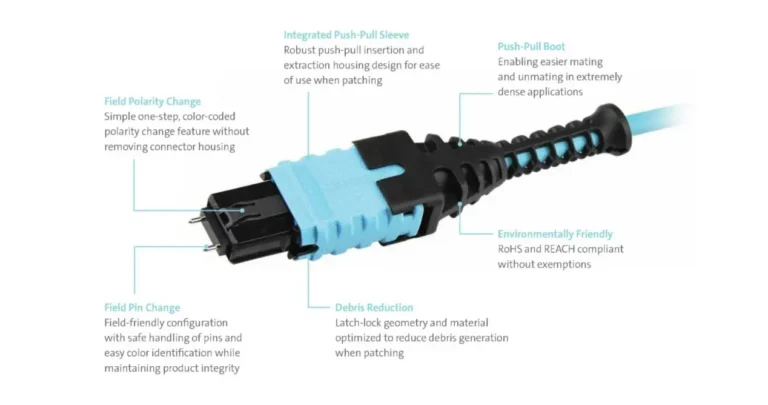
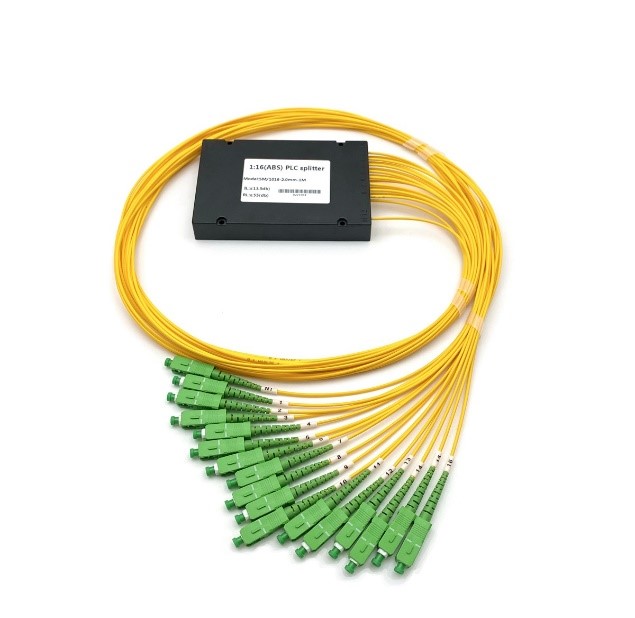
In the fast-changing world of high-speed data centers and telecoms, the need for the integrity of optical networks cannot be underestimated. As the speed of networks increases to 40G, 100G, and above, the room for error reduces drastically. This is where the MPO loopback SM (Single Mode) module becomes an indispensable tool for network engineers and technicians. These advanced devices are different from ordinary patch cords in the sense that they are designed in such a way that they will enable easy testing and troubleshooting without the use of any external complicated cables. The knowledge of the Mode MPO Loopback is crucial in this respect.
What is an MPO Loopback SM?
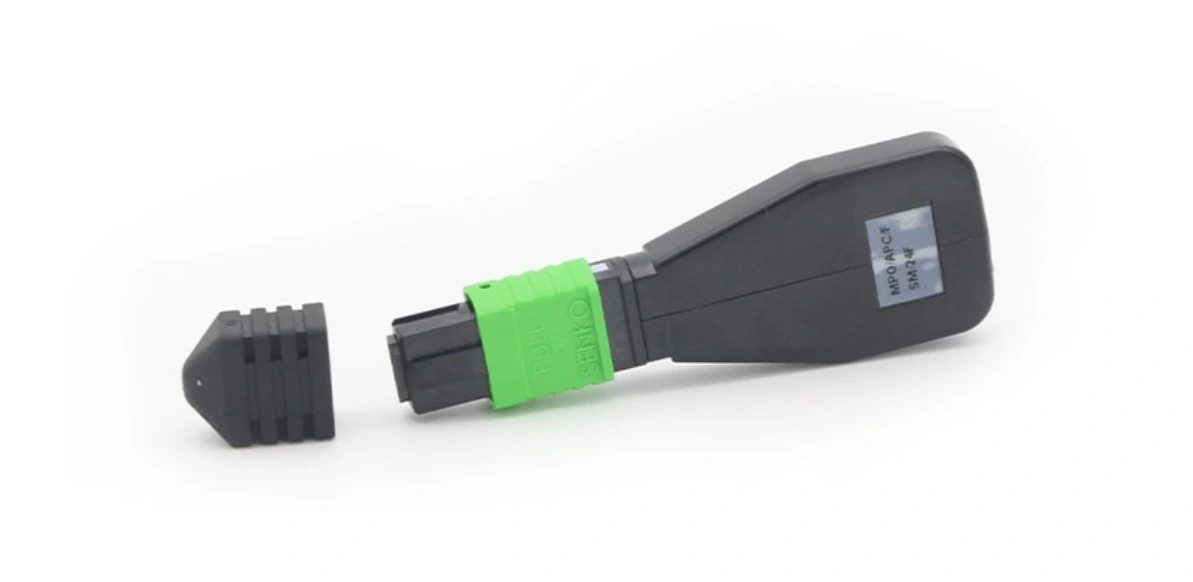
At its core, an MPO loopback SM is a passive optical device designed to route optical signals from a transmitter back to a receiver within the same port. This is basically the same as the MPO connector that has the internal looping back of the fibers. In this case, there will be immediate entry of the exiting signal from the TX channel to the RX channel.
Relevance of “SM”
The relevance of the “SM” acronym cannot be overemphasized in this context. The “SM” stands for Single Mode, which means the kind of optical fiber employed. In comparison to multimode fibers, single-mode fibers have a smaller core diameter (about 9µm). This enables the signals to be transmitted over greater distances.
Important Features and Uses
Because of these optical properties, an MPO loopback SM is specifically engineered for:
- Long-haul telecommunications.
- High-speed data center interconnects where single-mode optics are utilized.

Durable Hardware Design
To ensure reliability, these modules are often encased in a durable plastic housing. This design serves two main purposes:
- Protecting the delicate internal fiber connections.
- Ensuring a secure and precise fit within the transceiver port.
The Mechanism of Loopback Testing
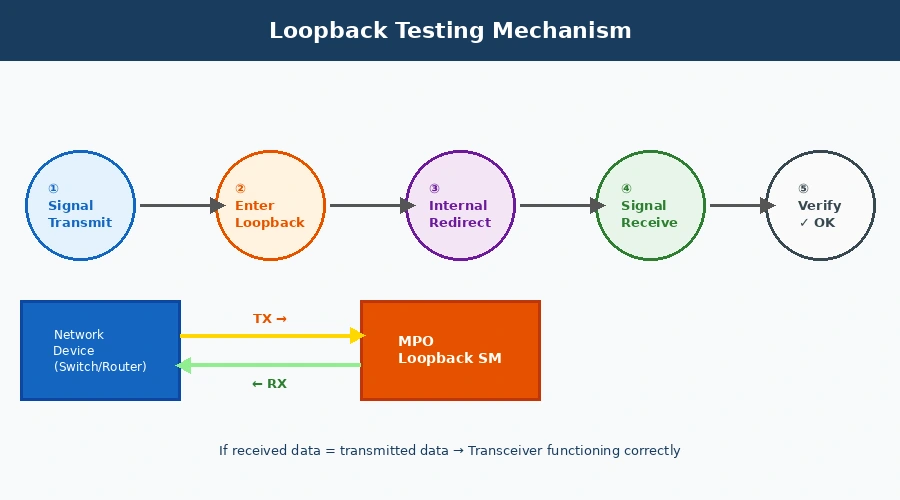
The primary function of an MPO loopback SM is to facilitate loopback testing. But how does this mechanism actually verify network health?
- Signal Transmission: The network device (such as a switch or router) sends a digital optical signal out through its transmitter port.
- The Loop: Instead of traveling down a long fiber span to another device, the signal enters the MPO loopback SM. Inside the module, the fiber path is mapped to redirect the light from the transmit fibers to the receive fibers.
- Signal Reception: The signal re-enters the device through the receiver port.
- Verification: The device analyzes the incoming signal. If the received data matches the transmitted data, the transceiver is functioning correctly.
This procedure is very important in assessing the transmission capacity and reception sensitivity of optical networking devices. This assists in identifying any problem because if the loopback test does not work, then the problem is with the local transceiver or the actual device and not the fiber outside.
Polarity and Channel Alignment
One of the most complex aspects of MPO technology is polarity—ensuring that Transmit channel 1 connects to Receive channel 1 on the far end. In a loopback scenario, we are managing this locally. An MPO loopback SM must be configured with the correct polarity type to match the transceiver’s requirements.
Common polarity configurations include:
- Type A (Straight-through): Fiber 1 connects to Fiber 1.
- Type B (Interleaved/Key-up to Key-down): This type is common in loop-backs, for instance, in a setup with 12fibers; Fiber 1 TX could be looped to Fiber 12 RX and Fiber 2 to Fiber 11.
- Type C (Pair-flipped): The fibers within pairs get swapped.
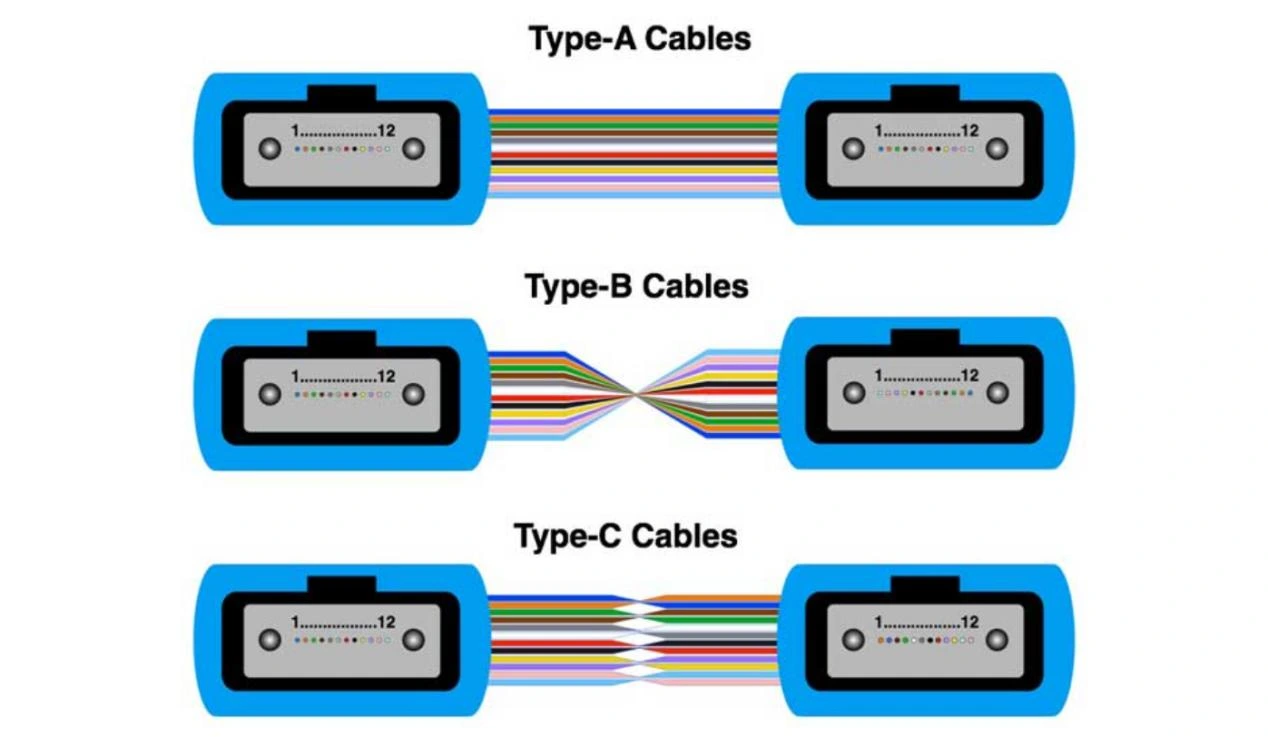
When selecting a single Mode MPO Loopback, understanding the specific channel alignment is crucial. For example, for the 100G SR10 module with the 24-fiber MPO, the correct mapping between the 10 transmit ports and the 10 receiving ports should be done. In case an incorrect polarity is used, even though the equipment operates just fine, the test will not pass.
Applications in High-Speed Networks
The MPO loopback SM is not just a theoretical tool; it has practical applications in various stages of network deployment and maintenance.
Burn-in Testing
Manufacturers and system integrators use these modules for “burn-in” testing. This involves running the optical modules at high temperatures and speeds for an extended period to ensure stability. The single-Mode MPO Loopback allows for a compact, reliable connection that can withstand the rigors of environmental testing chambers.
Field Problem Troubleshooting
Should the connection be lost in the live environment, it would be necessary to determine whether the problem is associated with the faulty SFP/QSFP or a severed fiber. By inserting an MPO loopback SM directly into the switch port, it is possible to check immediately whether the port is alive and can send/receive light.
Insertion Loss (IL) Testing
While primarily used for continuity and functionality, high-quality loopbacks are also used to test insertion loss. Precision Single Mode MPO Loopback with low-loss connectors (APC or UPC polish) ensures the accuracy of the test since there will be minimal loss of the signal, serving as an excellent benchmark for the device’s sensitivity.
Features of a Good Module
Not all loopbacks are made the same way. When dealing with sensitive single-mode equipment, the quality of the MPO loopback SM matters.
- Fiber Type: It must contain G657A1 fiber or something comparable that doesn’t suffer performance loss as a result of being bent internally by the housing of the module.
- Connector Quality: The MPO connector needs to be purchased from an established company (like Senko, US Conec) for perfect mating with the transceiver without any damage to the fragile guide pins.
- Housing Strength: External casing must be sturdy and typically consists of high-quality plastic, which will help protect the connector from damage during insertion and extraction operations.
- Protection from Dust: A removable dust cap is vital in protecting the surface of the connector from dust, which is the nemesis of single-mode optics.
Conclusion
In summary, the MPO loopback SM is a small but mighty component in the fiber optic toolkit. It acts as the middle ground between the transmitter and receiver, making it possible to perform quick and efficient diagnostics in fast-moving networks. Regardless of whether you are testing your equipment in a lab environment or diagnosing an operational connection in a data center, it is important to have knowledge of how the loopback module works. Using the right single-mode MPO Loopback, engineers can keep their optical network up-to-date and efficient.