| Item |
Parameter |
| Fiber Type |
Singlemode or Multimode |
| Fiber Diameter |
9/125um, 50/125um, 62.5/125um |
| Insertion loss |
MM<1.2dB, SM(G652D)<1.5dB,SM(G657A1)<0.75dB |
| Return loss |
SM>55dB; MM>25dB |
| Insert-pull Test |
500times, IL<0.5dB |
| Operation Temperature |
-40℃~ +80℃ |
| Tensile Resistance |
15kgf |
| Size |
60mm*20mm |
Polarity (Channel Alignment)

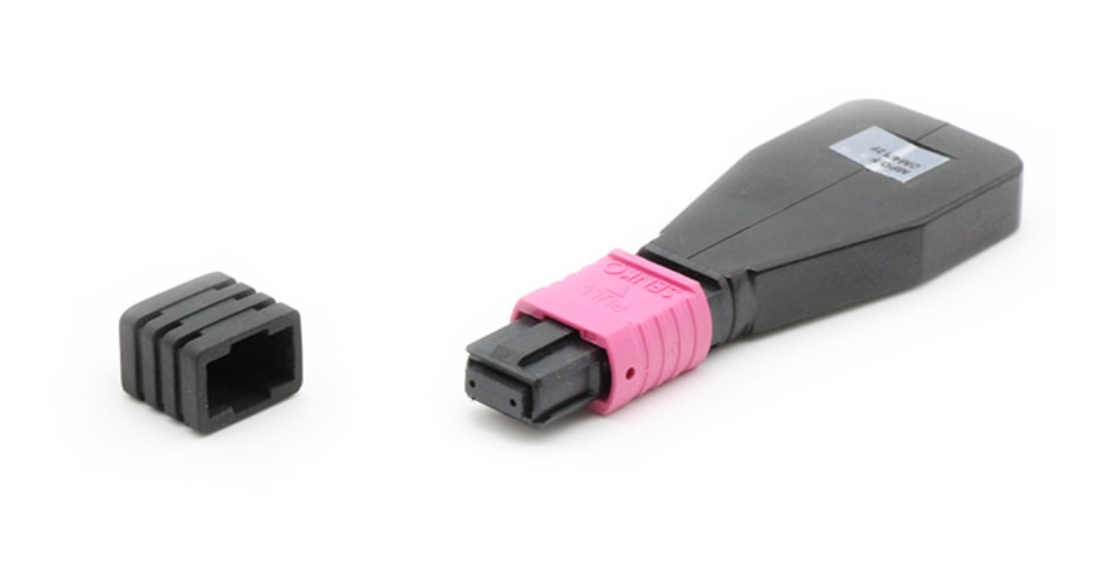
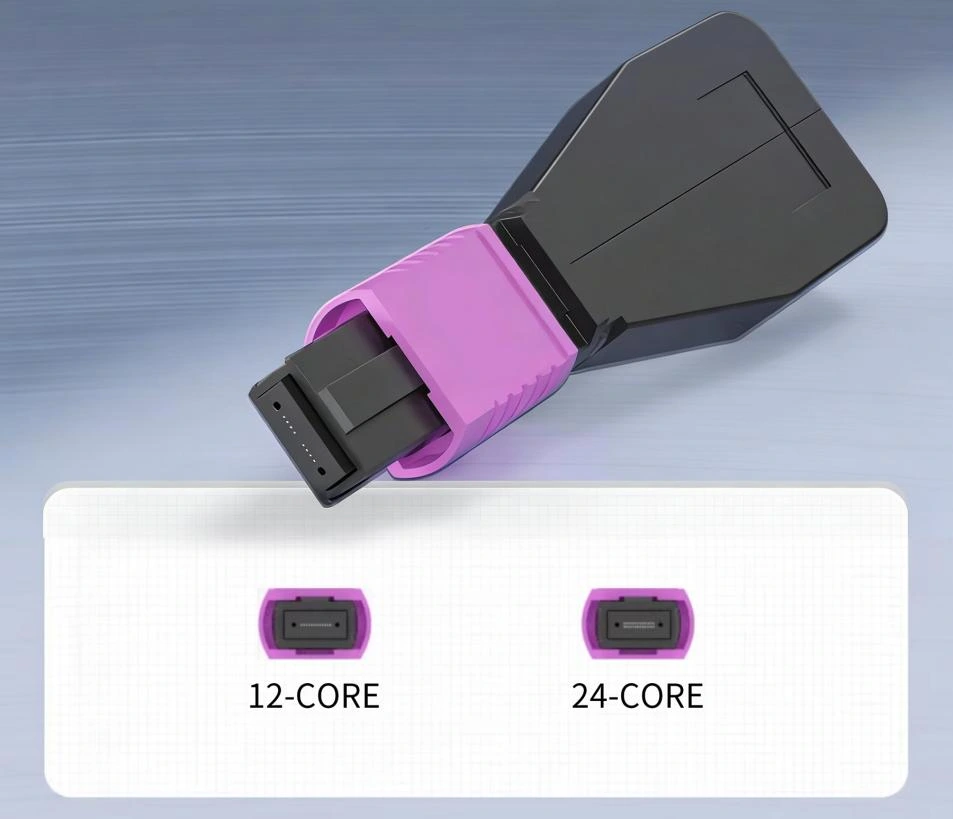
12F MPO Fiber Loopback Module for Transceiver Testing and Validation
The 12F MPO fiber loopback module enables effective verification and testing of MPO-based transceivers, including 40GBASE-SR4 QSFP+ and 100GBASE-SR4 devices.
OMC provides a comprehensive range of MPO fiber loopback assemblies for burn-in testing and validation of MPO network components and systems. These 12F MPO loopback solutions are widely used to evaluate transmitter performance and receiver sensitivity in telecom and data center applications. Designed with a compact form factor, they support high-density deployments while maintaining excellent reliability and repeatability.
Features
12F MPO loopback assemblies are designed for singlemode and multimode fibers with 12- and 24-fiber options and MPO male/female connectors. The assemblies are for 40G QSFP+ and 100G CXP/CFP transceivers. The assemblies are for high-performance operations and are tested for reliability. This fiber loopback solution ensures accurate network validation and high-quality signal testing.
- SM 9/125, MM 50/125, MM 62.5/12512 or 24 Fiber Ferrule
- Female and Male MPO/MPO option of Connectors
- Polarity Variants selection40G QSFP+ and 100G CXP/CFP transceivers
- Factory Terminated and Tested MPO Interface
- MPO components feature superior optical and mechanical properties
12F MPO vs 24F MPO
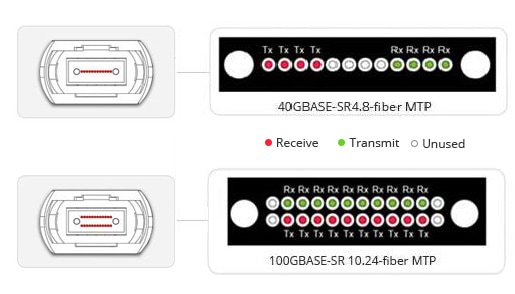
The 12-fiber MPO interface is used for 40G networks, with 4 lanes of 10G each, totaling 8 fibers—4 for transmission and 4 for reception. This configuration is suitable for both singlemode and multimode fibers, ideal for high-density environments and 40G transceiver testing.
The 24-fiber MPO interface is used for 100G networks, supporting 10 lanes of 10G each, totaling 20 fibers—10 for transmission and 10 for reception. It is typically deployed in singlemode fiber for long distances or in multimode systems for shorter ranges, making it perfect for 100G transceiver testing.
Summary of Key Differences:
12F MPO:
- Supports 40G connections with 4 lanes of 10G each (8 fibers total).
- Typically used for singlemode or multimode fiber systems.
- Ideal for testing 40G QSFP+ transceivers.
24F MPO:
- Supports 100G connections with 10 lanes of 10G each (20 fibers total).
- Primarily used for singlemode fiber, but also applicable for multimode networks.
- Suitable for testing 100G CXP/CFP transceivers and other 100G optical components.
Application in the Data Center
- Transceiver Testing: The 12F MPO loopback module is best suited for testing 40G and 100G MPO/MPO interface transceivers. It can be used to test the transmission capacity and receiver sensitivity of network equipment.
- Fiber Loopback for Network Equipment: This fiber loopback solution is used to test the performance of fiber optic network equipment in high-speed environments, helping engineers confirm the integrity and reliability of optical components, such as switches and transceivers.
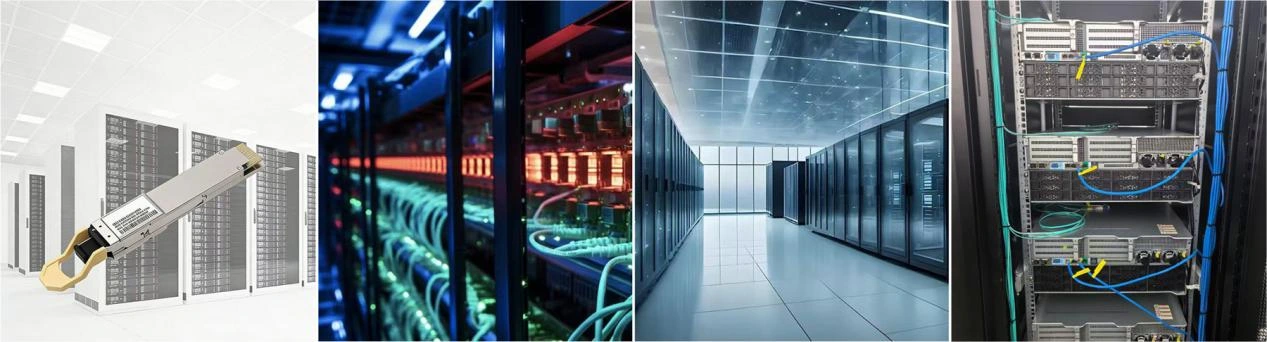
- High-Density Data Center Compatibility: The 12F MPO loopback is a high-density data center-compatible device designed for testing in high-density data centers. It is best suited for testing both single-mode and multi-mode networks and is used in testing 40G and 100G networks.
- Burn-in and Fault Isolation: The fiber loopback plays an important role in burn-in and fault isolation. The burn-in process helps network engineers identify any possible problems during the initial setup of the network.
FAQ
- What is a 12F MPO loopback used for?
A 12F MPO loopback is used to verify the performance of 40G and 100G transceivers. It is used to loop the signal to verify the transmission and reception functions. It is used to verify the integrity and functionality of the fiber optic equipment.
- How does a fiber loopback differ from a patch cable?
Fiber loopback is designed to loop the optical signal. It is used to verify the performance of the transceivers. Unlike the patch cable, which is used to connect two optical fibers together, the loopback module is used to loop the signal. It is ideal for validating the performance of the network equipment.
- What is the difference between 12F MPO and 24F MPO loopbacks?
A 12F MPO loopback supports 40G networks, with 8 fibers (4 transmit and 4 receive), while a 24F MPO loopback is used for 100G networks, with 20 fibers (10 transmit and 10 receive). The 12F MPO is designed for lower bandwidth systems, while the 24F MPO is ideal for high-speed, high-density applications.
- Can the fiber loopback module be used for both singlemode and multimode fiber?
The fiber loopback module can support single-mode and multi-mode fibers. Thus, it can support different types of network environments. It can support long-distance networks through single-mode fibers. Similarly, it can support short-distance networks through multi-mode fibers.