


With the rise of artificial intelligence computing, cloud services, and fast data applications, modern data centers require cabling systems that can provide faster data transfer as well as increased flexibility and efficiency in handling the increasing number of connections among servers, switches, and storage devices.
Traditional fiber cabling methods can meet basic connectivity requirements, but as data center scales continue to grow, large numbers of individual fiber cables can create challenges such as complicated cable management, longer installation periods, and difficulties during maintenance. As a result, high-density pre-terminated fiber solutions have become an important choice for modern network infrastructure. Among these solutions, 72F MPO Trunk cable has gained popularity due to its high fiber capacity, fast deployment capability, and efficient space utilization.
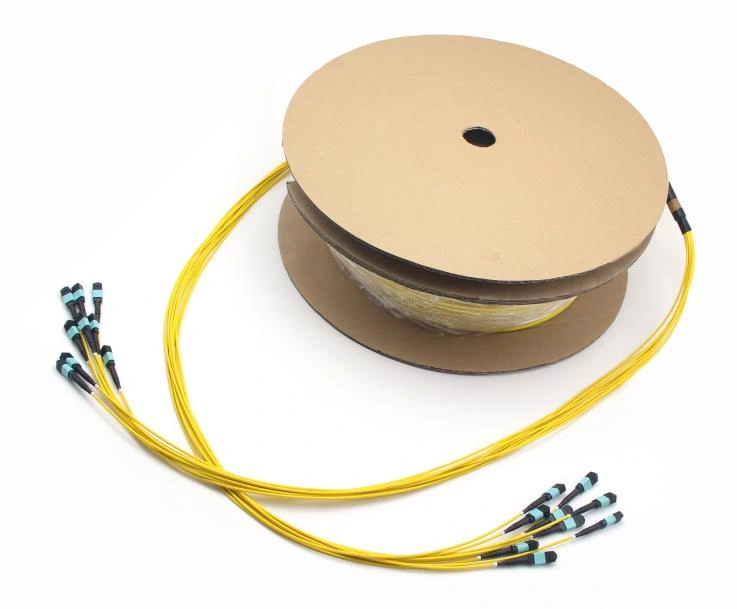
High-Density Design Meets Data Center Expansion Needs
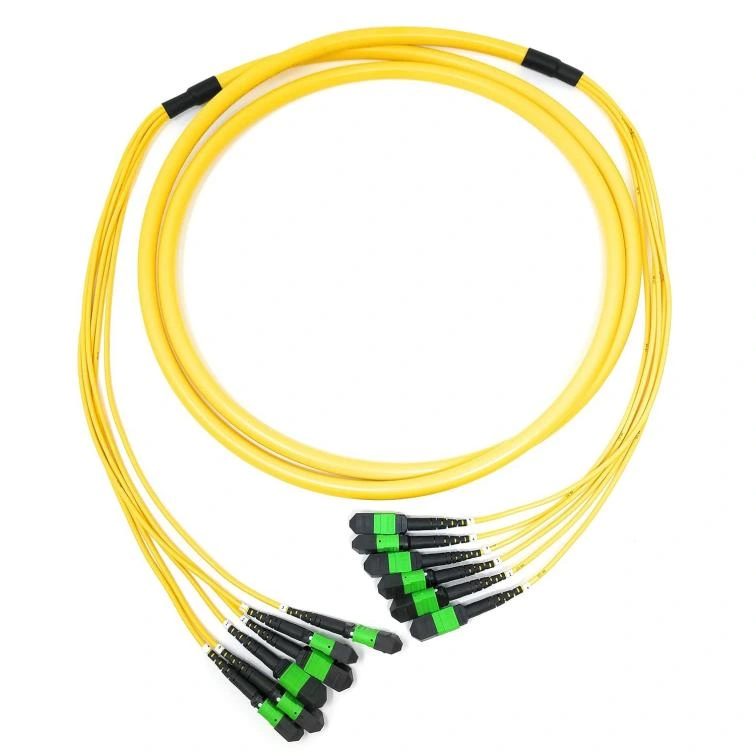 72-Fiber Structure Improves Cabling Efficiency
Modern data centers often contain thousands of servers, network devices, and storage systems, creating a growing demand for reliable and organized fiber connections.
A 72F MPO Trunk cable is designed with 72 optical fibers and typically uses multiple MPO connectors to achieve high-density connectivity. In many configurations, both ends of the cable are terminated with 6 MPO connectors, with each connector containing 12 fibers. This design enables one trunk cable to support 72 fiber connections, minimizing the need for multiple separate cables in the network setup.
For instance, in a data center switch room environment, the use of fiber optics technology might necessitate the use of many cables in making connections between the equipment racks. With the implementation of the MPO trunking approach, there will be an opportunity to reduce clutter, optimize rack space utilization, and create room for expansion.
Ruggedized Structure Enhances Installation Reliability
In addition to fiber capacity, cable construction plays an important role in ensuring long-term performance and reliability.
High-quality MPO trunk solutions often adopt ruggedized multi-unit micro fiber cable structures to provide stronger protection during cable deployment. For instance, a typical 72F MPO Trunk cable in drum design can include 6 individual unit cables, each with a 3.0mm outer diameter. Each unit cable contains 12 color-coded bare fibers, allowing installers to quickly identify different fiber paths during installation.
This modular structure helps reduce installation errors while improving cable handling performance. In large data center projects where cables may need to be routed through long pathways or complex rack systems, a durable cable structure can minimize the risk of damage and improve overall deployment efficiency.
Why Are MPO Trunk Cables Suitable for High-Speed Networks?
Supporting 10Gbps, 40Gbps, and 100Gbps Applications
Due to the ever-increasing amount of data traffic, current network environments need to have a fiber solution that can offer increased bandwidth and stable performance. This is necessary for applications including cloud computing systems, AI, and large enterprise networks.
A 72F MPO Trunk cable can support 10Gbps, 40Gbps, and 100Gbps data center solutions, making it suitable for both current network deployments and future upgrades.
In other words, when working with 100 Gbps switches in a data center, MPO connectivity will offer high-speed connections between network components along with a small cabling solution. This way, there will be no congestion within equipment racks, which is important for future scalability.
Pre-Terminated Design Reduces Deployment Time
Data center projects may need quick installations in order to cater to business requirements. Conventional fiber installation processes may include field termination, testing, and other labor processes that could increase the time taken to complete the project.
MPO pre-terminated trunk cables make things easier since they have connectors already installed and tested before being delivered for deployment.
For large-scale infrastructure projects, 72F MPO trunk cables in drums can provide additional convenience. The drum packaging method allows project teams to plan cable routes according to actual installation distances, making transportation and deployment more efficient. This solution is particularly useful for large data centers that require rapid backbone cabling deployment.
Main Applications of 72F MPO Trunk Cable
Data Center Backbone Networks
Modern data centers are commonly designed with a multi-layer network structure that consists of core, aggregation, and access levels. Among these areas, backbone networks require high-capacity and stable fiber connections.
Due to its high fiber density and reliable transmission performance, this type of MPO solution is widely used for connections between switches, fiber panels, and optical modules. For example, in a large server facility with thousands of computing nodes, high-density fiber cabling can help create a cleaner and more manageable infrastructure.
Cloud Computing and High-Performance Computing Environments
Huge amounts of data are generated by cloud computing and high-performance computing every day. In this context, the need to have low-latency and high-bandwidth connectivity between computing devices arises.
High-density MPO connectivity ensures network scalability and readiness for further expansion and upgrade of the infrastructure. The well-planned installation of optical fibers will help to avoid additional cabling efforts during the increase of network speed.

What Factors Should Be Considered When Choosing MPO Trunk Cables?
Selecting the right MPO trunk solution requires more than simply choosing the fiber count. Several factors should be evaluated based on project requirements.
| Consideration | Importance |
| Fiber type | Determines transmission distance and network compatibility |
| Connector quality | Affects signal stability and connection reliability |
| Cable structure | Influences mechanical protection and installation performance |
| Cable length | Impacts routing efficiency and cable management |
For example, data centers with limited rack space may prioritize compact, high-density cabling solutions, while larger facilities may require customized cable lengths to optimize installation efficiency.
However, it is important to carry out performance testing to ensure smooth operation. In most cases, high-quality MPO components undergo performance testing such as insertion loss, return loss tests, and connector end face inspection.
Future Trends in Data Center Cabling
The development of 400G and 800G network technologies will continue to increase demand for advanced fiber connectivity solutions. Future data center cabling systems will need to provide higher bandwidth, faster installation, easier management, and better scalability.
With its modular design and high-density connection capability, MPO technology will continue to play an important role in next-generation data center infrastructure. Solutions such as the 72F MPO Trunk cable provide a practical approach for organizations looking to build flexible and future-ready network environments.
Conclusion
In modern data centers, high-density and reliable fiber connectivity has become a critical part of network infrastructure. By reducing cable quantity, improving deployment efficiency, and supporting high-speed applications, MPO trunk solutions provide an effective way to build scalable data center networks.
The company, OMC, focuses on manufacturing fiber connectivity systems of the highest quality and offers advanced 72F MPO Trunk cable systems. If you have any inquiries regarding the MPO fiber solutions or want professional help with your cabling project, you are welcome to get in touch with OMC, whose experts will be happy to assist you.


