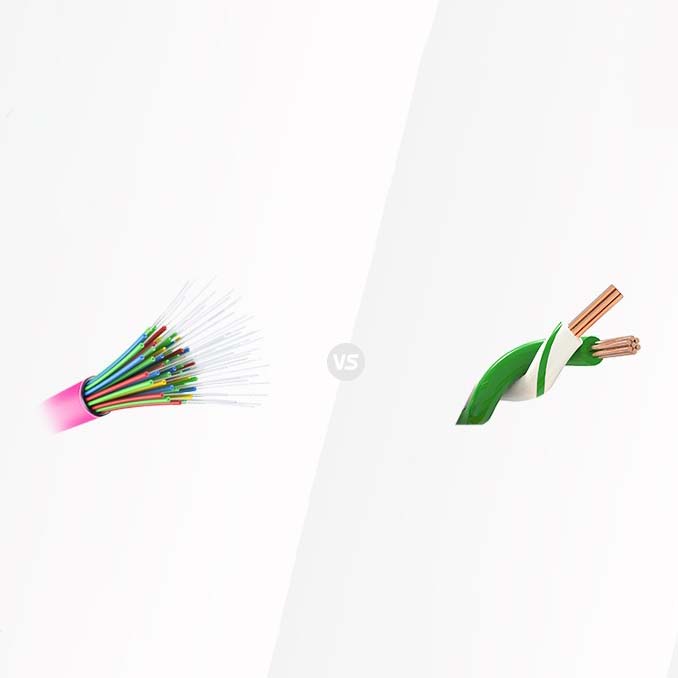
Fiber Optic Cables link switches, patch panels, and other networking devices. Selecting the correct cables is essential to determine the distance of signal transmission, the performance quality of the signal, and the cost of installation.
While SC connectors are suitable for use with both single-mode and multimode fibers, there is a distinction between the performance specifications and applications of each. This makes it easy to choose the correct SC Fiber Patch Cord.
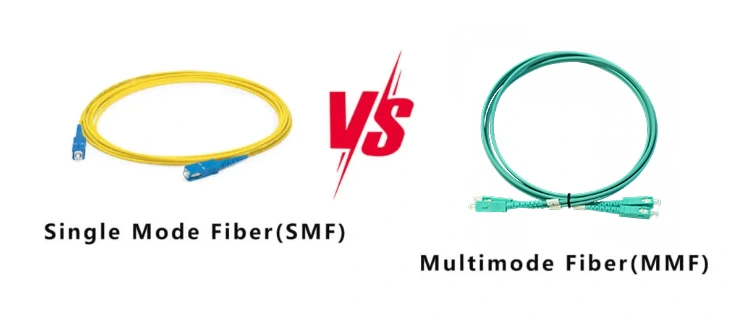
1. What is a Single-Mode & Multimode SC Fiber Patch Cord?
An SC fiber patch cord consists of a cable assembly with SC connectors installed at the two ends of the cable. The SC connector is of a push-pull type, while single-mode and multimode define the mode of travel of light through the fiber.
Single Mode SC Fiber Patch Cord
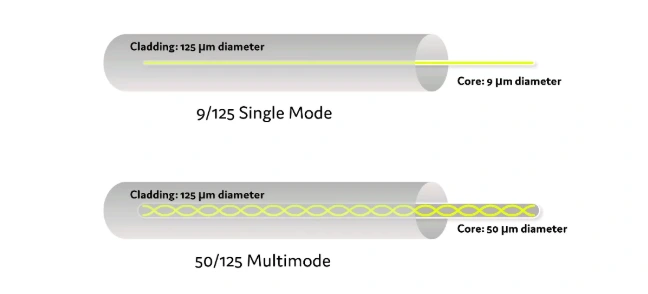
The size of the core of single-mode fiber is usually around 9 microns, with the core/cladding specification as 9/125 microns. The problem of modal dispersion can be avoided with single mode fibers, and these fibers can carry information for long distances. Its common applications are home networks, telecommunications networks, and metro networks. Common wavelengths used are 1310nm and 1550nm.
Multimode SC Fiber Patch Cord
The multimode fiber has a core size of either 50 μm or 62.5 μm. Because of its relatively large core size, many modes of light can propagate via the multimode fiber; however, the difference in propagation time will cause modal dispersion. Therefore, the multimode fiber is normally used for short distances.
Applications include corporate local area networks and data centers with multimode fiber compatibility. Most systems work at the 850 nm wavelength; however, some work at the 1300 nm wavelength. The transmission distance will depend on fiber type, data rate, and the optical transceiver.
2. Key Differences Between Single-Mode and Multimode SC Fiber Patch Cords
The main differences involve core size, transmission distance, operating wavelength, and equipment compatibility.
| Comparison | Single-Mode | Multimode |
| Core diameter | 9 µm | 50 μm or 62.5 μm |
| Common wavelengths | 1310 nm, 1550 nm | 850 nm, 1300 nm |
| Transmission distance | Longer links | Generally shorter links |
| Applications | FTTH, telecom networks | LANs, data centers |
| Transceivers | Single-mode optics | Multimode optics |
Distance of Transmission and Quality of Signal
Single-mode fiber is generally chosen for long-distance communication due to low modal dispersion. Multimode fiber is a good choice in case of short connections with compatible hardware.
Nevertheless, maximum distance of transmission depends on more parameters than fiber type only. It includes fiber grade, transmission speed, optical modules, connector loss, and other factors.
Optical Module and End-face of Connector
Using the same SC connector design is not a factor that ensures optical compatibility. Compatible are only those fiber optics that have appropriate types of fiber and wavelength of operation.
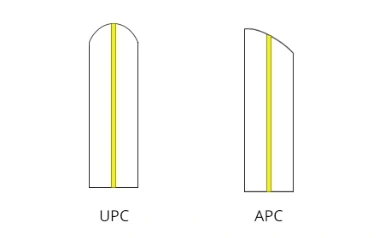
SC/UPC and SC/APC are different in end-face design. SC/APC usually implies the use of an 8-degree angled end-face, while SC/UPC has a highly polished contact point. Such types of connectors are incompatible.
In case of selecting an SC Fiber Patch Cord, it is necessary to consider insertion loss and return loss. Dust or scratches on connectors can lead to poor quality of the signal.
3. How to Select a Suitable Single-Mode and Multimode SC Fiber Patch Cord?
It depends on the network requirements, the connected devices, and the installation scenario.
Check Distance and Data Rate
Use single-mode fiber for FTTH networks or long-distance communication. Multimode fiber could be used for a shorter-distance connection if it is compatible with the installed cable and the optical module.
Refer to the transceiver datasheet for the supported types of fiber, wavelength, data rate, and maximum distance of transmission before buying.
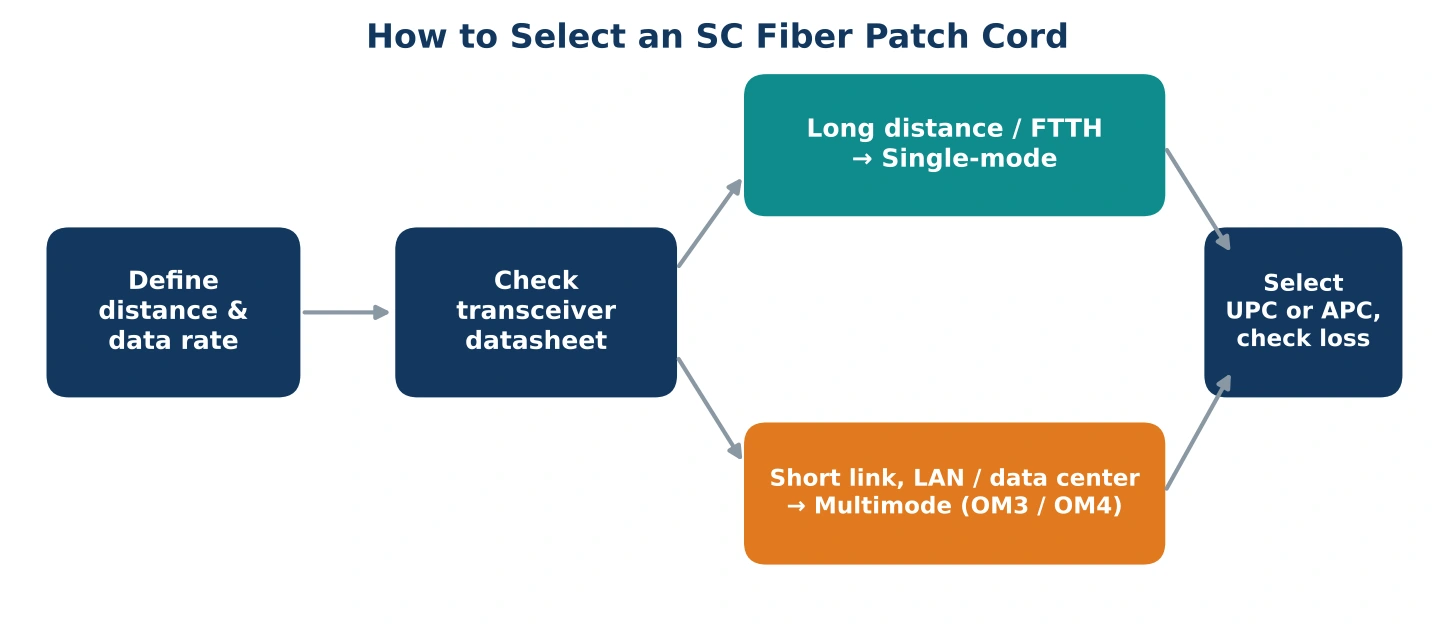
Check Connection Type and Cable Design
Before you order your SC Fiber Patch Cord, make sure you have checked the following information:
- Connection type: It should be either SC/UPC or SC/APC.
- Type of fiber: Make sure that it is either single-mode fiber or a certain grade of multimode fiber like OM3 or OM4.
- Cable design: Select the proper one according to your requirements for connecting equipment or an FTTH network.
Check Optical Performance and Future Requirements
Optical performance is also something that you will have to take into account when choosing SC Fiber Patch Cords. Check the stated insertion and return loss values, especially when it comes to links with strict optical budgets. The dirty end face of the connector, as well as any damage to the fiber and faulty connections, may cause signal loss, and therefore careful checking and cleaning is required.
It should also be taken into account that there might be some future upgrades to the network. If this connection might be required to operate over greater distances or at greater speeds, think about whether this selected fiber infrastructure is capable of meeting these demands.
4. Conclusion
Both single-mode and multimode SC fiber patch cords cater to different needs. Single-mode fiber is typically employed in FTTH applications and distant locations, whereas multimode fiber can be used in short-range applications.
While selecting an SC Fiber Patch Cord, ensure that you have selected the right patch cord considering transmission distance, data rate, transceiver, and connector. Should you have any queries regarding fiber types or products, do not hesitate to get in touch with OMC GROUP.