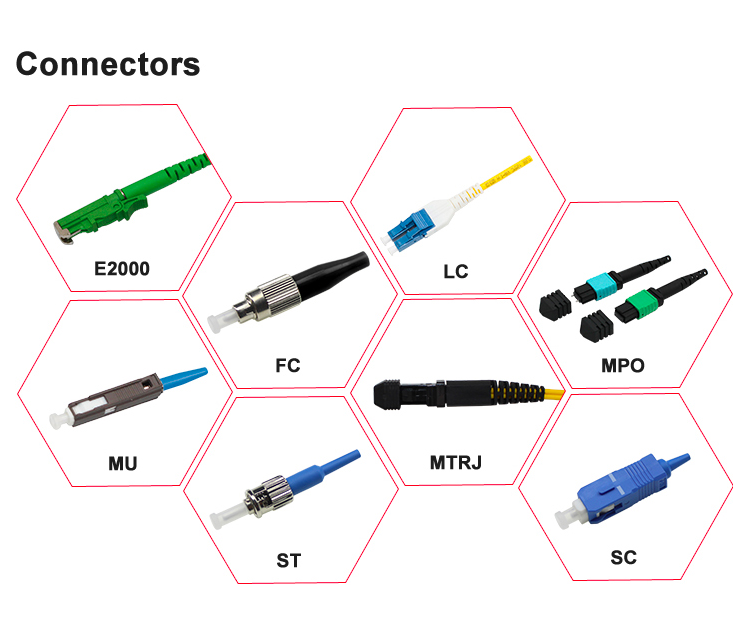
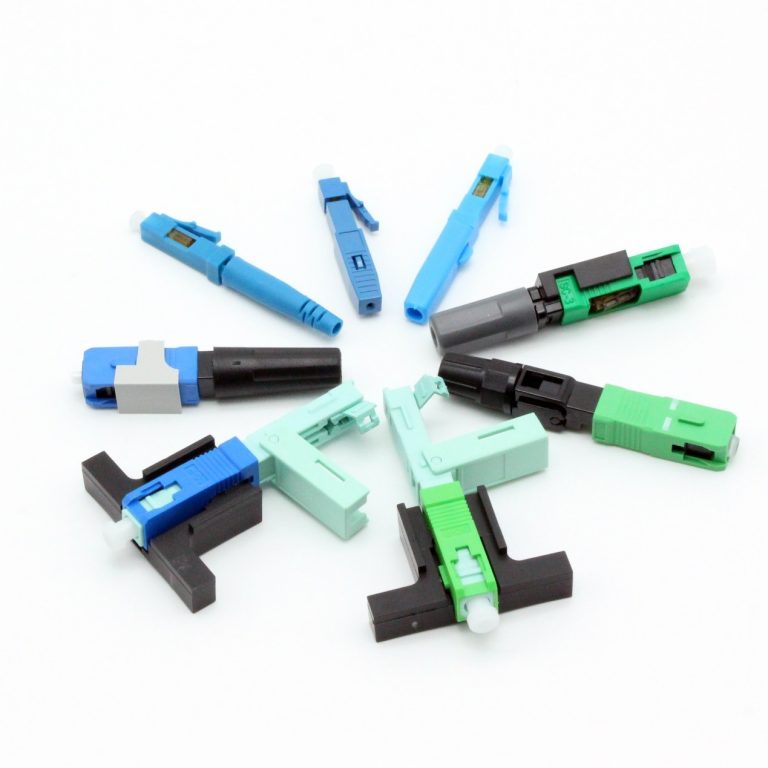
With the fast-moving developments in the area of data centers and high-speed telecommunications, network integrity cannot be ignored. With data speeds increasing to 40G, 100G, and more, the equipment needed for network testing needs to keep pace. And that is where a unique device such as the 24F MPO loopback becomes essential. It is not just a cable but a unique device that can be used to test the functionality of high-density optical transceivers. This article will take a closer look at the uses and specifications of this device.
What is a 24F MPO Loopback?
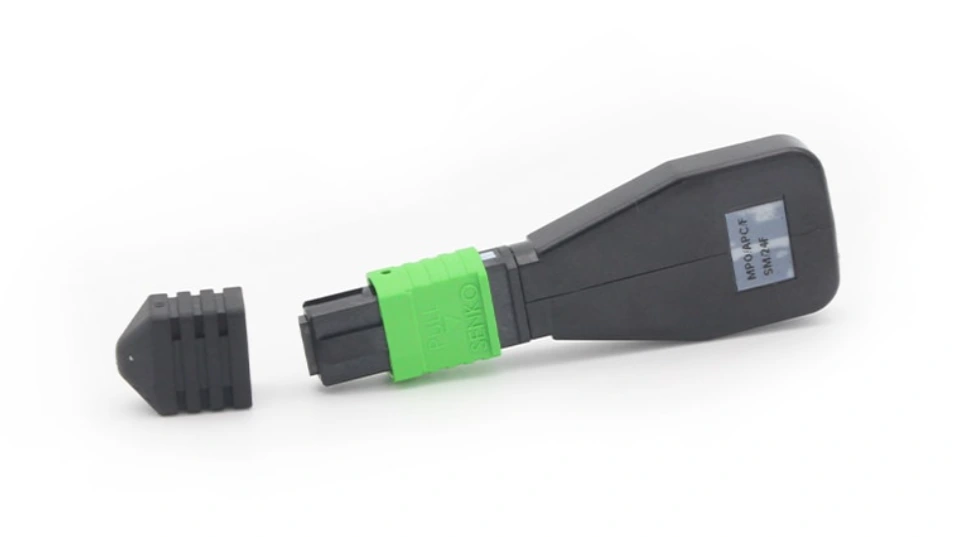
A 24F MPO loopback is a type of fiber optic device used to perform diagnostic tests on network equipment. The major task of this instrument is to create a loopback path for the optical signals. During a normal test procedure, the loopback module creates a direct connection between the TX ports of the transceiver and the RX ports. Thus, it is possible to check whether the equipment can transmit and receive data without using other equipment on the opposite side.
These instruments are designed for parallel optics. Parallel optics has become the basis of 40G and 100G networks. Unlike standard patch cords that connect two different points, a loopback module reflects the signal to its source. As such, this is a very important instrument that can be used in burn-in testing, manufacturing tests, and on-field maintenance of the network components based on the MPO principle.
Why Is the 24-Fiber MPO Loopback Important for 100G?
With the increase in data rates, 12-fiber structures were replaced by 24-fiber structures. It is essential to know the specifics of this transformation to understand the importance of the 24-fiber MPO loopback.
- 12-Fiber Structures (40G): The traditional connection in 40G networks (40GBASE-SR4) implies using an MPO-12 connector. This structure has 8 active fibers, of which 4 are responsible for transmitting and another 4 are responsible for receiving the data.
- 24-Fiber Structures (100G): With 100G connections (100GBASE-SR10), more lines are needed. As a result, a 24-fiber connection implies having 10.
Since a 100G transceiver requires 20 fiber strands, the 12-fiber loopback does not suffice in this case. The 24F MPO loopback is particularly manufactured with 24-fiber ferrules because of the pinout of the 100G CXP/CFP transceiver, which is the standard.
Specifications and Performance Metrics
In choosing the right loopback module, it is important to consider the technical specifications of the device. A high-quality 24F MPO loopback will have tightly controlled performance metrics.
| Parameter | Specification |
| Fiber Count | 24 Fibers |
| Fiber Type | Single-mode (SM) or Multimode (MM) |
| Fiber Diameter | 9/125 µm (SM), 50/125um (MM), 62.5/125um (MM) |
| Insertion Loss (IL) | SM (G657A1): <0.75dB; SM (G652D): <1.5dB; MM: <1.2dB |
| Return Loss (RL) | SM: >55dB; MM: >25dB |
| Operating Temp. | -40℃ to +80℃ |
What Are Insertion Loss and Return Loss?
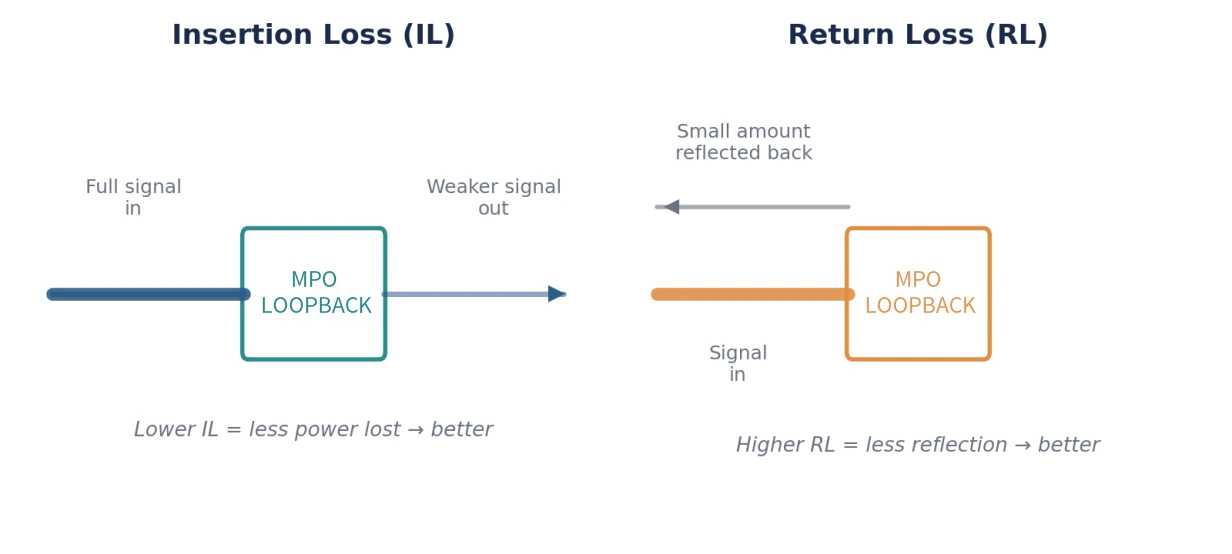
- Insertion Loss (IL): This is used to measure the amount of power loss as light travels through the loopback assembly. The lower the IL figure, the more power the signal has on its way back to the receiver. The 24F MPO loopback is factory-terminated and tested to ensure minimal loss.
- Return Loss (RL): This measures the amount of light reflected towards the source. A higher RL value is better, as excessive reflection can interfere with the laser’s performance and destabilize the signal.
Understanding Polarity in a 24-Fiber MPO Loopback
Polarity is arguably the most complex aspect of MPO systems. This guarantees that the transmit port at one end properly links to the receive port at the other end. For the loopback test, the polarity should be set in such a way that there is an appropriate crossover between the TX and RX ports using the same connector.
The 24F MPO loopback uses a particular channel orientation known as Type 1 polarity to accomplish this task. This module internally routes the fiber optic connection to guarantee that any transmission done in channels 1-10 loops back to the receive channel 11-20 (or something similar, depending on the transceiver standard).
If the polarity of the module is not properly set, the test fails since the transmission will never link to the receive port.
Primary Applications in Data Centers
The 24-fiber MPO loopback is a versatile tool found in various stages of a network component’s lifecycle.
- Transceiver Testing and Burn-In: Manufacturers use these modules to test the transmitter output power and receiver sensitivity of 100G CXP/CFP modules before they are shipped. The “burn-in” process involves running the transceiver at high temperatures for an extended period with the loopback attached to ensure long-term reliability.
- Network Installation and Maintenance: When deploying new 100G links in a data center, technicians use the 24F MPO loopback to verify that the switch ports and optics are functioning correctly. It helps isolate problems, determining whether an issue lies with the active equipment or the fiber cabling plant.
- Insertion Loss (IL) Testing: The module can be used in conjunction with an optical loss test set (OLTS) to measure the loss of an entire MPO trunk cable. By connecting the loopback at the far end, a technician can test the full duplex link from a single location.
As network speeds continue to increase, the margin for error shrinks. The 24F MPO loopback is a fundamental component for anyone working with 100G parallel optics. Its ability to provide a reliable, low-loss return path for optical signals makes it an essential tool for validating the performance and reliability of high-density network equipment. From the factory floor all the way to the rack in the data center, this little machine makes sure that the spine of our modern era works without a hitch.
To read more detailed articles and stay updated with the latest developments in high-speed fiber optics technology, please keep following us. We promise to deliver all the technical details you need for your strong network infrastructure.